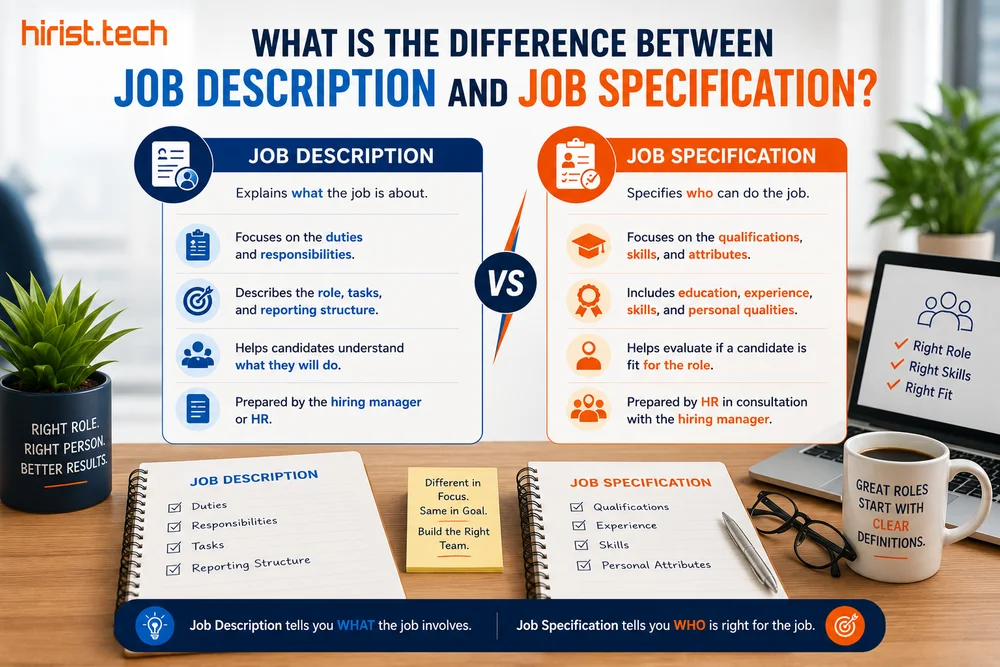
Job description and job specification are two terms that shape every hiring process. You often see them in job posts and they are used to shortlist resumes and guide interview questions. That’s why it is important for job seekers to understand the difference between job description and job specification.
- A job description explains what the role involves.
- And the job specification shows the skills and qualities needed to perform it well.
When you understand both clearly you can judge a role properly and see if it matches your background and goals. This clarity also helps you prepare better for applications. In this blog, we will explain job description vs job specification in detail with examples.
Job description vs job specification – Quick comparison
Here is a quick comparison table to help you understand the difference between job description and job specification.
| Basis | Job Description | Job Specification |
|---|---|---|
| Meaning | Explains what the job involves in daily work | Explains the skills and qualities needed for the job |
| Purpose | Helps job seekers understand duties and expectations | Helps job seekers check if they match the job requirements |
| Contents | TasksRole purposeWork environmentReporting | SkillsEducationExperienceCertificationsTraits |
| When it is created | Created first after doing a job analysis | Created after the job description is final |
| Who uses it | Used by hiring teams and candidates to understand the role | Used by hiring teams and candidates to judge suitability |
| Flexibility | More flexible and updated often with role changes | More stable and changes rarely |
| Example | “You will handle customer calls and maintain records” | “Must have communication skills and basic computer knowledge” |
Note: We will cover job description vs specification in much more detail later in the blog, so you get a full and clear understanding.
What is job description and job specification?
Now that you know the basic differences, let’s define job description and job specification in clear terms. Understanding the job description and job specification definition helps you see how each one helps hiring managers and candidates make better decisions.
What is a job description?
A job description is a short statement that tells you what the role actually looks like in day-to-day work. It explains why the role exists and what the company expects someone in that position to handle in terms of duties and responsibilities. It is a very important tool for employers and potential employees.
Companies create job descriptions to set clear expectations and avoid confusion later. It also becomes the base for writing the job specification.
A job description helps you understand what the company needs from the position and gives candidates a clear idea of the role before applying.
Key components of a job description
Job description structure differs from one company to another, but here are some of the key components present in most roles.
1. Job title
The job title is the first thing you see. It tells you the name of the role and gives you a quick sense of its level. For example, “Marketing Executive” and “Senior Marketing Executive” sound similar but have very different responsibilities. A clear job title helps you understand the position’s seniority and purpose even before reading the details.
2. Job summary
The job summary gives you a quick picture of what the role is about before you read the full description. It explains the main tasks and the purpose of the job in simple words. A good job summary often highlights:
- The nature of the work
- The location of the role
- The team or department you will work with
- Where the role sits in the company structure
- The general goal the role is meant to achieve
This short section helps you quickly decide if the role fits your skills and interests.
3. Role purpose
The role purpose tells you why the position exists in the company. Every role supports a goal: developing software, handling bugs, or managing operations. This section explains what the company expects the role to achieve.
4. Duties and responsibilities
This is the most detailed part. It lists the daily and weekly tasks you will handle in the job. It tells you exactly what the company expects you to do, like preparing reports, visiting clients, or managing a team. This helps you imagine what your day will actually look like in the role.
5. Work environment
This part explains where and how you will work. It tells you if the job is:
- Office-based
- Remote
- Field-based
- Hybrid
It may also mention travel requirements or physical conditions like standing for long hours or working with machinery.
6. Tools or software used
Most jobs require certain tools or software. This section mentions the programs or systems you need to use, such as:
- CRM tools
- Excel
- Development software
- Machinery
- Design tools
It helps you see if you are comfortable with the technology the company uses.
7. Reporting structure
The reporting structure tells you who you will report to and who you might supervise. It helps you understand the flow of responsibilities within the team. This section makes the role’s position in the hierarchy very clear.
8. Working hours and conditions
This explains the work schedule, shift type, weekend work, or travel requirements. It may also mention overtime expectations or flexible timings.
9. Basic qualifications
This part lists the minimum requirements needed for the job. It usually mentions education and experience level. It tells you the starting point you must meet to be considered for the role.
10. Pay range (if included)
Some companies share the salary range to help you understand the compensation level for the role. Even if the exact number is not mentioned, a range helps set expectations and gives an idea of the job’s value in the company.
Example of job description
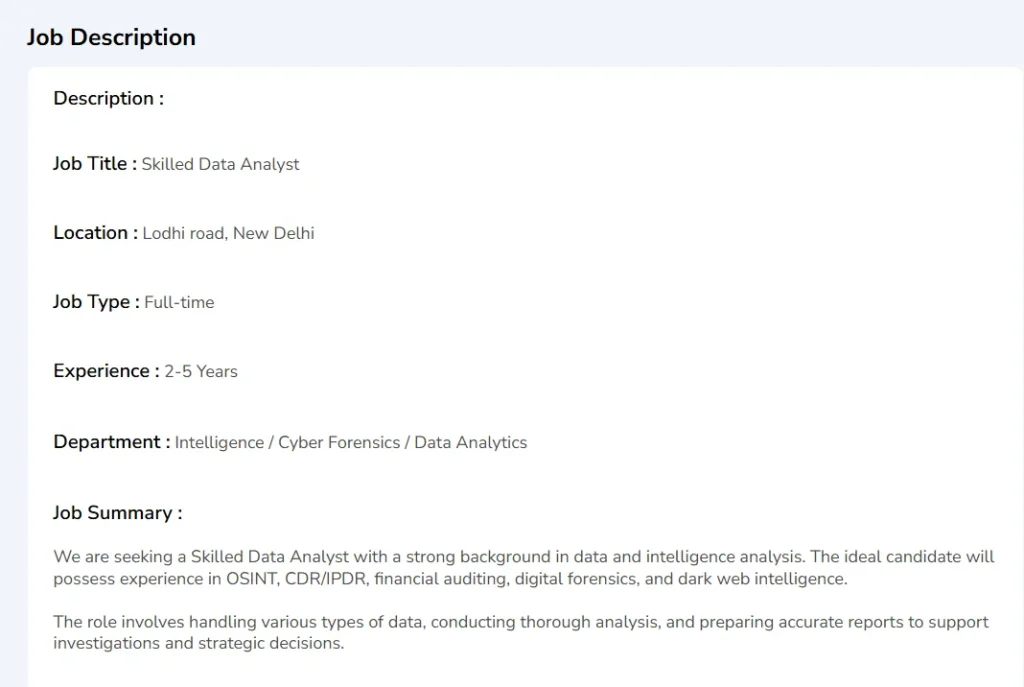
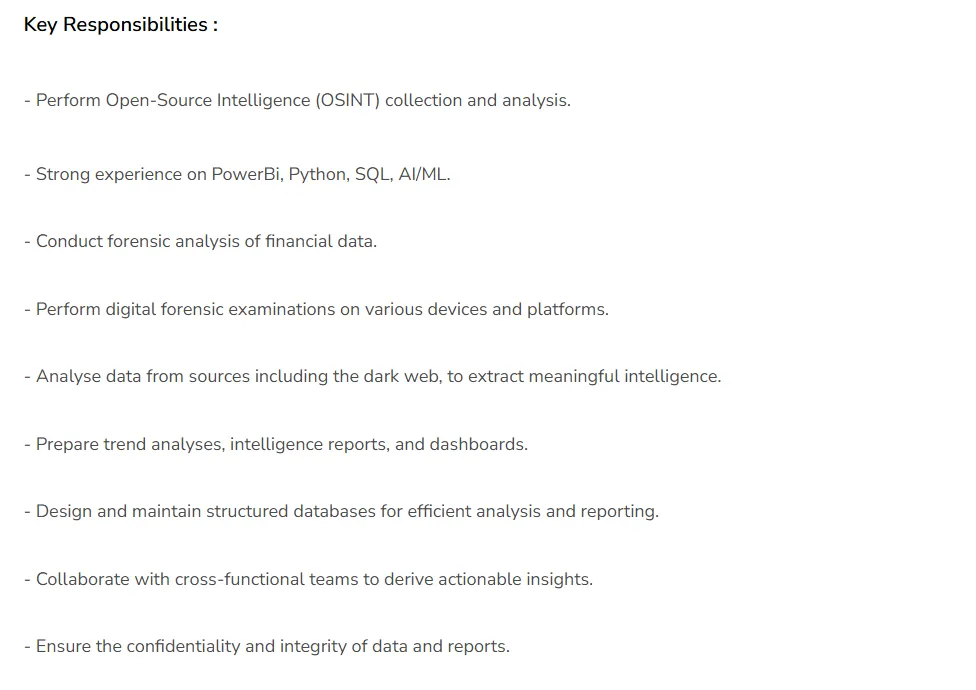
Here is an example of a job description for a Data Analyst role taken from Hirist, a popular IT job portal known for tech opportunities in India.
What is a job specification?
A job specification describes the qualities a person should have to perform a role well. It explains the level of ability and background a candidate needs to handle the tasks mentioned in the job description. The job specification is always created after the job description because it builds on the details already shared about the role.
For companies, it acts like a clear checklist that makes shortlisting easier and helps them compare candidates fairly. For job seekers, it becomes a simple self-check to see if they match the role before applying.
Key components of a job specification
Job description and specification work together, and these components help you understand what a candidate must bring to the role beyond basic duties.
1. Education requirements
This explains the minimum education level needed for the role. It helps you see if the job requires a specific degree, diploma, or academic background to perform the work confidently.
2. Technical skills
These are the job-related abilities you must already know, such as software knowledge, tools, systems, or technical processes. It shows what you must be able to handle from day one.
3. Soft skills
How you work with people matters as much as technical ability. These are people-focused qualities like communication, teamwork, planning, and problem-solving. Soft skills help you work smoothly with others and manage daily tasks effectively.
4. Experience level
This tells you how much past work experience the company expects. It may be entry-level, mid-level, or senior-level, depending on the demands of the role.
5. Certifications
Some jobs need special training or industry-approved certificates. This section lists any mandatory or preferred certifications that strengthen your application.
6. Personality traits
Certain roles need a particular attitude or style of working. Qualities like patience, confidence, or attention to detail may be mentioned to show what kind of person suits the job environment.
7. Physical or mental demands of the job
Some roles need specific physical strength, stamina, or mental focus. This part explains requirements like working long hours, travelling, lifting items, or handling high-pressure tasks.
8. Behavioral expectations
This explains how the company expects you to act in the workplace. It may include professionalism, punctuality, teamwork habits, or how you handle challenges and feedback.
Example of job specification
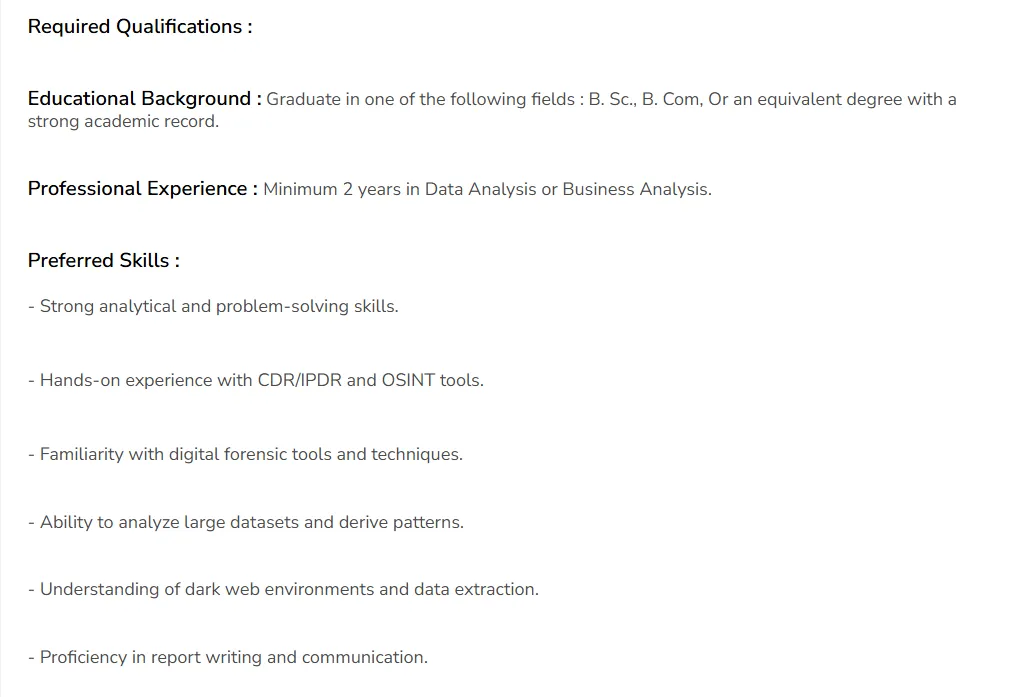
This job specification is taken from the same Data Analyst job description shared on Hirist, so you can see how both documents connect.
Difference between job description and job specification
Here are the 10 differences between job description and job specification. These points will help you understand how both documents serve different roles in hiring.
1. Meaning
A job description explains the role itself. It shows what the job looks like on a normal working day and what tasks you will handle for the position inside the company.
A job specification describes the type of person who can perform that role well. It highlights the qualities, experience level, and capability a candidate should bring to the job.
2. Purpose
The purpose of a job description is to make the work clear. It sets expectations for what the employee will do and helps avoid confusion after hiring.
The purpose of a job specification is to set the minimum standards for applicants. It tells candidates what they must have and helps hiring teams shortlist people who genuinely fit the role.
3. Timing or order
Job descriptions always come first because companies must define the role before deciding what kind of person should fill it.
Job specifications come second. They are built from the job description, turning tasks and responsibilities into requirements and qualifications.
4. Focus
A job description focuses on work-related details: tasks, goals, key duties, work conditions, and scope. It answers “What will the person do?”
A job specification focuses on person-related details: skills, education, experience, and traits. It answers “Who can do this job well?”
5. Contents
This is the main difference between a job description vs job specification. A job description usually includes the job title, role purpose, tasks, responsibilities, working conditions, and reporting structure. It may also mention tools used or the pay range.
A job specification lists the qualities needed for the role, such as education, technical skills, soft skills, experience, certifications, and personal attributes.
6. Use in hiring
Job descriptions are used to create job posts, communicate expectations, and help candidates see if the actual work matches their interests. Hiring teams also use them to design interview questions.
Job specifications help recruiters filter applications. They offer a checklist that makes shortlisting easier and helps compare candidates fairly.
7. Flexibility
When it comes to flexibility in job description vs specification, the former changes more often. Duties and tasks can shift as teams grow and technologies improve, thereby changing the job description.
Job specifications usually stay stable unless the role changes completely. A company may update qualifications or skills later, but not very frequently.
8. Who uses it
The job description is used by hiring managers, HR teams, and candidates. It helps employers communicate expectations and helps job seekers understand the nature of the role.
The job specification is mostly used during screening. Recruiters, managers, and interviewers rely on it to judge whether someone meets the required standards.
9. Origin
A job description is prepared after studying the role through job analysis. This involves observing work and identifying key responsibilities.
A job specification is created from the job description. Once the duties are clear, employers convert them into the qualifications and qualities needed to perform them well.
10. Evaluation and screening
Job descriptions help companies identify skill gaps or overlapping tasks within teams. They also help set performance expectations after hiring.
Job specifications help evaluate candidates. They make it easier to compare two applicants because everyone is measured against the same requirements.
Job description and job specification examples
Now that you understand the differences, let’s look at a job description and job specification sample to see how both documents are written in actual hiring situations. This will also help you understand the format of job description and job specification in a better way.
A. Job description example
Job Title: Software Developer
Company Overview:
TechPoint Solutions is a fast-growing IT company that builds custom software for clients across finance, retail, and healthcare. Our team works on real projects that impact daily business operations.
Role Summary:
The Software Developer will work on building and improving web applications. The role involves writing clean code, fixing issues, and collaborating with the development team to deliver high-quality features.
Role Purpose:
This position exists to support ongoing projects, improve application performance, and help the team meet client deadlines.
Key Duties and Responsibilities:
- Develop and maintain web applications
- Write clean, readable, and testable code
- Fix bugs and troubleshoot technical issues
- Work with the design and QA teams to deliver new features
- Participate in code reviews and team discussions
- Document technical processes when required
Work Environment:
Office and hybrid work options depending on project needs. Collaboration through Slack, Jira, and regular virtual stand-up meetings.
Tools / Software Used:
JavaScript, React, Node.js, Git, Jira, and SQL databases
Reporting Structure:
Reports to the Senior Software Engineer and works closely with the development team.
Working Hours:
Monday to Friday, regular office hours with occasional weekend work during major releases.
Basic Qualifications:
Bachelor’s degree in Computer Science or related field
Pay Range:
₹6,00,000 to ₹10,00,000 per year, depending on experience
B. Job specification example
Job Detail: Software Developer
Education Requirements:
Bachelor’s degree in Computer Science, IT, or similar areas
Technical Skills:
- Strong knowledge of JavaScript
- Hands-on experience with React or Angular
- Basic understanding of Node.js or backend development
- Ability to work with Git and version-control systems
Soft Skills:
- Clear communication
- Problem-solving ability
- Good teamwork habits
- Willingness to learn new tools and technologies
Experience Level:
1–3 years of software development experience
Certifications (Optional):
React certification, JavaScript certification, or any relevant coding bootcamp certificate
Personality Traits:
Detail-oriented, patient, proactive, and comfortable working in a fast-paced tech environment
Physical or Mental Demands:
Ability to sit for longer durations during coding sessions and manage deadline pressure during releases
Behavioral Expectations:
Professional behaviour, timely communication, active participation in meetings, openness to feedback, and collaborative approach to team projects
Why job description comes before job specification
Understanding this order makes it easier to see the difference between a job description and a job specification, because one always depends on the other.
- The role must be defined first: You cannot decide who fits the job until you know what the job actually involves.
- Job tasks shape the requirements: The duties and responsibilities listed in the job description decide what skills and experience are needed.
- Avoids guessing candidate qualities: Without a clear job description, companies may set random or unrealistic requirements.
- Helps HR write accurate specifications: Hiring teams convert duties into skills, qualifications, and experience once the role is fully understood.
- Keeps hiring consistent: Following this order helps companies maintain a structured and predictable hiring process.
Also Read - Difference Between Offer Letter and Appointment Letter
Difference between job description and job analysis
Job analysis is the process of studying a role to understand what work needs to be done. It involves:
- Observing tasks
- Speaking with employees
- And identifying the responsibilities and skills connected to the job
This research gives companies a clear picture of the role before they start writing any official documents. Job analysis is conducted before writing the job description.
Job description vs job analysis
Here is a simple table to help you understand the difference between job description and job analysis.
| Basis | Job Analysis | Job Description |
|---|---|---|
| Meaning | Studying a role to understand its tasks and conditions | A written summary of duties and responsibilities based on the analysis |
| Purpose | To collect accurate information about the job | To present the work in a clear document for hiring and communication |
| Order | Comes first as the foundation | Written after the analysis is completed |
| Focus | What the job involves in detail | What the employee is expected to do day-to-day |
| Outcome | Raw data and insights about the role | A structured document used for hiring and clarity |
Why it is important to know the difference between job description and job specification
Understanding the difference between job description and job specification helps you read job posts correctly and make smarter choices while applying or preparing for interviews.
- Helps you judge a role easily: You can quickly understand what the job involves and what the company expects from you.
- Saves time during job search: You avoid roles that do not match your skills or experience.
- Improves interview preparation: Knowing both documents helps you highlight the right strengths and customise your answers better.
- Reduces confusion later: You get a clear idea of duties and expected performance before joining.
- Helps in career planning: You can see which skills you need to grow into better roles in the future.
- Supports better resume preparation: You can match your resume to the job description and specification to improve your chances of getting shortlisted.
Why companies need both job description and job specification?
Companies rely on job description and specification together because each document gives different information that supports better hiring and smoother workplace planning.
- Better hiring: Using both documents helps companies match the right person with the right role more accurately.
- Reduced confusion: Teams know exactly what the job involves and what the candidate must bring to the table.
- Improved employee performance: Clear duties and required skills help employees focus on what truly matters in their day-to-day work.
- Helps during promotions or training: Managers use both documents to see skill gaps, plan training, and decide when someone is ready for a higher role.
- Stronger workforce planning: HR can identify future staffing needs and plan replacement hiring more confidently.
- Improved compliance: Clear documents help companies follow internal policies and stay aligned with audit or HR standards.
Also Read - Placement Preparation Guide: Steps, Tips & Resources
Wrapping up
That’s everything you need to understand about job description vs job specification to help you apply for the right roles. Knowing how both documents work gives you clarity and helps you prepare stronger applications by keeping your job search more focused. Each one highlights a different side of the role, so together they help you judge a position correctly.
Now that you can read job description and job specification the right way, find relevant tech opportunities on Hirist, one of India’s leading job portals for IT professionals.
FAQs
A Job Description explains what the job involves—duties, responsibilities, and work environment—while a Job Specification lists who is suitable for the role, detailing required skills, qualifications, experience, and traits.
Match the JD’s keywords and responsibilities to your résumé content for ATS compatibility, and use the JS as a checklist to highlight your education, technical skills, soft skills, and experience that align with the role’s requirements.
Yes—focus on core qualifications. Many employers list ideal traits but are open to candidates who demonstrate strong learning ability and relevant experience, especially if you meet 70–80% of the key requirements.