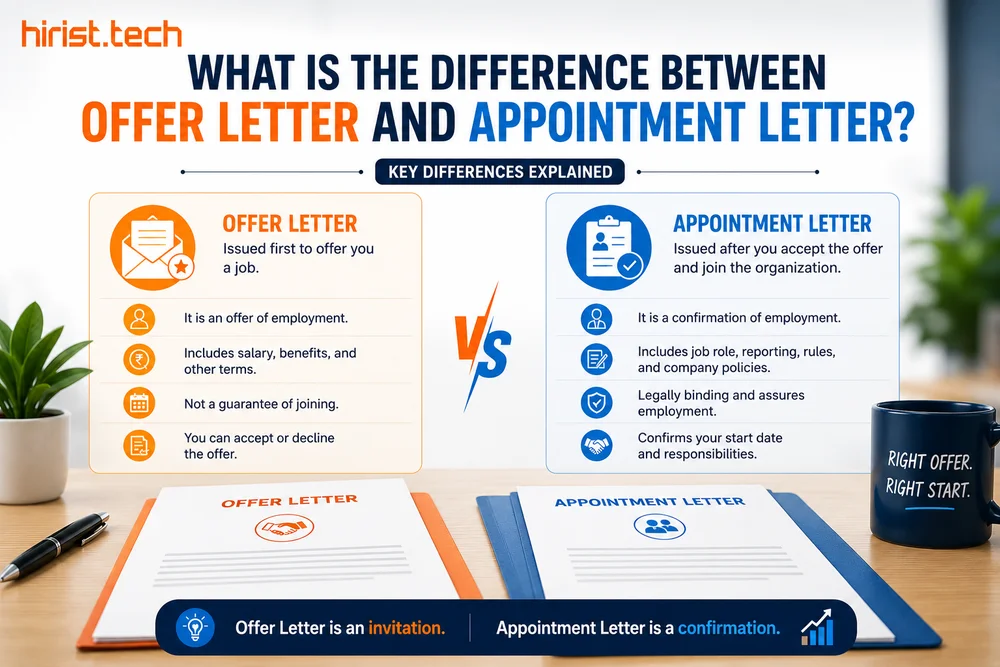
The difference between an offer letter and an appointment letter is something every job seeker should understand because both documents affect your job in different ways.
These two documents may look similar, but they serve very different functions.
- An offer letter presents the initial terms an employer is willing to provide.
- An appointment letter confirms the final terms of your employment after you accept the offer.
Knowing this difference helps you understand your compensation and joining requirements better. It also helps you see which document is flexible and which one becomes legally binding.
So, in this blog, we will explain the difference between offer letter and appointment letter in detail.
Offer letter vs. appointment letter – Quick comparison
Here is a simple comparison table that helps you understand the difference between offer letter and appointment letter differ clearly.
| Offer letter | Appointment letter | |
|---|---|---|
| Purpose | Shows the company’s intention to hire | Confirms final employment |
| Timing | Given after you clear the selection process | Issued after you accept the offer letter |
| Legal status | Usually not legally binding | Legally binding document |
| Detail level | Basic job information | Full employment terms and policies |
| Use | Helps candidates decide | Used for onboarding and verification |
| Flexibility | Terms can change | Terms remain fixed |
| Document role | Starts the hiring stage | Marks the start of employment |
Note: We will discuss the difference between an offer letter and an appointment letter in more detail later in the blog.
What is an offer letter?
An offer letter is the first official document you receive after passing the final interview and clearing the selection process. It shows the employer’s intention to hire you for the job and gives you a clear idea of what they are ready to offer at this stage. Think of it as the company saying, “Here is what we can give you if you choose to join us.”
What an offer letter contains
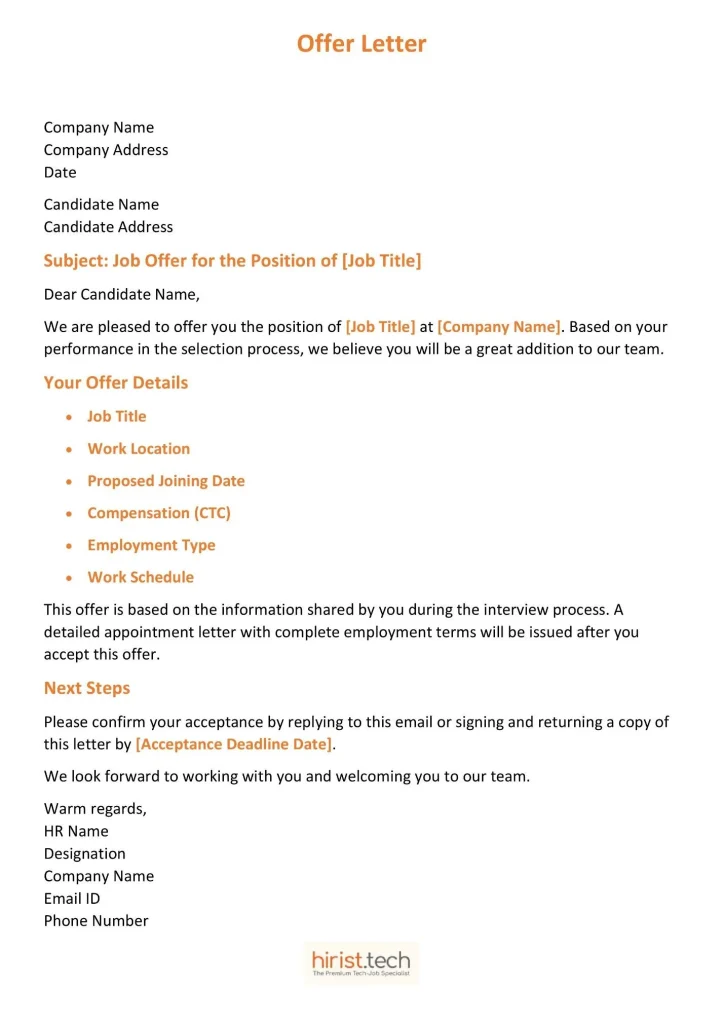
Most offer letters include direct details such as:
- Job title
- CTC or compensation offered
- Proposed joining date
- Work location
- Work schedule or shift details
- Employment type (full-time, part-time, contract)
- Basic terms and initial benefits
- At-will or provisional statement if the company uses one
These points are meant to give you a basic outline of the job. The finer details usually come later in the appointment letter.
Importance of an offer letter
The offer letter matters because it helps you understand what the company is ready to provide initially.
- Gives clarity on the job role and salary offered
- Helps you compare different job opportunities
- Allows you to negotiate salary or joining date
- Acts as an early reference for planning your resignation
- Shows the employer’s intention to hire you
- Helps you check if the proposed terms match what was discussed in interviews
Sample offer letter
What is an appointment letter?
An appointment letter is the document you receive only after you accept the job offer. It is more formal and lengthy. Unlike the offer letter, it becomes legally binding once you sign it. This is the letter that officially confirms your hiring and marks the beginning of your employment with the organisation.
What an appointment letter usually contains
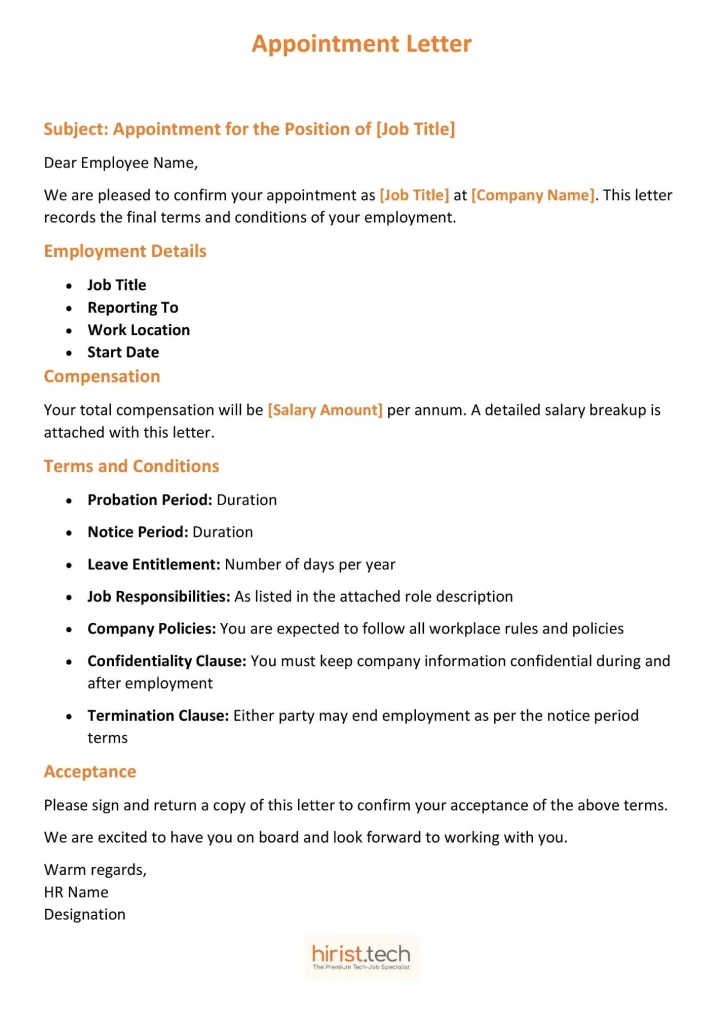
Appointment letters are more detailed than offer letters. They include complete details such as:
- Job role and responsibilities you will handle
- Reporting manager and reporting structure
- Work hours and weekly schedule
- Leave rules and available types of leave
- Detailed salary breakup, including fixed, variable, and deductions
- Probation period, if applicable
- Notice period rules
- Termination conditions and grounds for separation
- Confidentiality and non-compete clauses
- Arbitration clause for dispute resolution
- Exclusivity clause, if the company requires you to avoid other work
- Company policies and code of conduct
- Bond details, only if the organisation uses one
Importance of an appointment letter
The appointment letter helps you understand exactly what is expected from you once you join and what you can expect from the company in return.
- Serves as official proof that you are hired
- Provides detailed terms you must follow after joining
- Helps avoid confusion about role, salary, or responsibilities
- Includes legal clauses that protect both you and the employer
- Used for onboarding, payroll, and system access
- Acts as a reference if disputes arise about job conditions
Sample appointment letter
Difference between offer letter and appointment letter
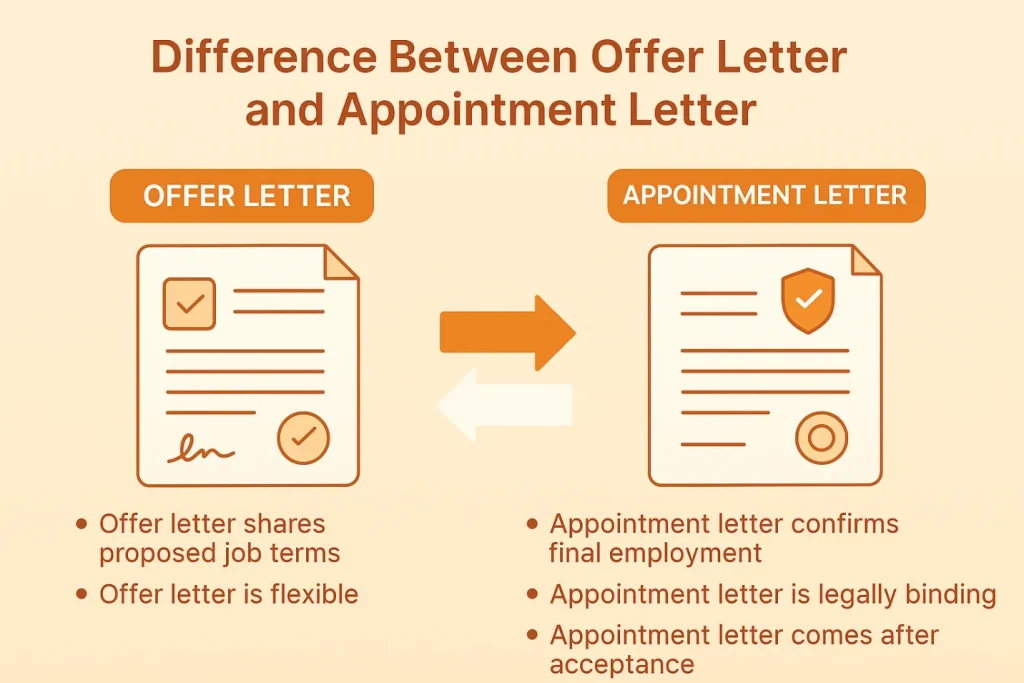
Although both documents are part of the same hiring process, the offer letter and appointment letter work very differently. Here is a clear explanation of the difference between offer letter and appointment letter .
1. Definition
The offer letter is the document a company shares after selecting you to show the job terms they are willing to offer. It signals their interest in hiring you but does not confirm your employment yet.
The appointment letter is the document that confirms you are officially hired after you accept the offer. It records the final employment terms that will apply once you join.
2. Purpose
The purpose of an offer letter is to help you understand the proposed terms so you can decide if you want to accept the job.
The purpose of an appointment letter is to confirm your appointment and lay down the conditions you will follow once you join.
3. Content
The offer letter normally includes job title, CTC offered, joining date, work location, and basic terms. It gives you a broad idea of the job but does not explain every rule or policy.
Appointment letters include complete information such as responsibilities, salary breakup, work rules, notice period, policies, and legal clauses. Everything that affects your employment appears here.
4. Timing
The offer letter comes first. It is issued right after the selection process is complete and the employer decides they want to hire you.
The appointment letter comes only after you accept the offer. Before issuing it, companies may complete background checks or internal approvals. Once this is done, the appointment letter is prepared and shared.
5. Legal status
The offer letter does not have strong legal value. The terms can still change, and most companies treat it as a proposal, not a final agreement.
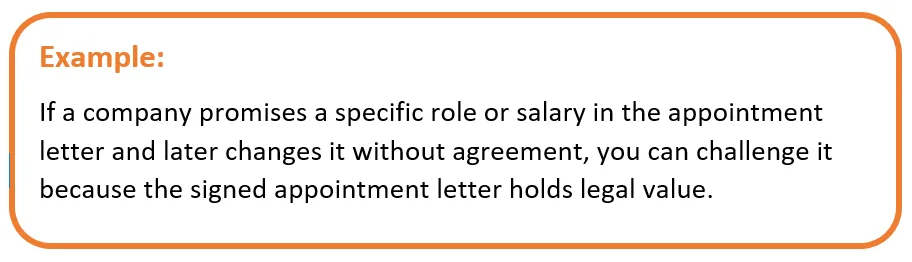
The appointment letter carries legal weight. Once you sign it, the terms become binding on both you and the employer. If a dispute arises about salary, notice period, or responsibilities, this is the document people refer to.
6. Flexibility
The offer letter gives room for discussion. You can negotiate salary, joining date, or terms because nothing is final yet. Companies also revise offer letters when needed.
The appointment letter is fixed. Once issued, the terms are expected to stay the same. Any changes later require formal approval or an updated letter from the employer.
7. Use
Candidates use the offer letter to evaluate the job, compare it with other offers, plan their resignation, and decide how soon they can join. It acts as an early reference point.
HR teams use the appointment letter for everything that follows – onboarding, ID card creation, payroll setup, system access, compliance checks, and employment verification. It becomes part of your official employee record.
8. Role in hiring
The offer letter starts the hiring stage by showing the company’s intention to bring you on board.
The appointment letter marks the beginning of your actual employment and sets the rules you will work under.
Also Read - Recommendation Letter Template: Free Samples & Format
Difference between appointment letter and employment contract
An appointment letter confirms your hiring and outlines the terms you will follow after joining. An employment contract is a formal legal agreement that defines the working relationship between you and the employer. It sets the rights, responsibilities, and conditions that apply throughout your employment.
Letter of appointment vs. employment contract
Here is a simple table to help you understand the difference between an appointment letter and an employment contract.
| Appointment letter | Employment contract | |
|---|---|---|
| Purpose | Confirms hiring and shared terms | Defines complete legal obligations |
| Detail level | Moderate detail | Highly detailed and comprehensive |
| Clauses | Limited clauses | Full legal clauses and protections (NDA, IP, liabilities, non-compete) |
| Use | Onboarding and joining formalities | Governs long-term employment rights |
| Flexibility | Minor changes possible | Changes need formal legal approval |
Note:
Some companies issue both documents separately. Other companies merge both into a single document to keep the process quick and avoid duplicate paperwork.
Also Read - Relieving Letter – Format, Samples, Examples (2025)
Which document is legally binding?
Here is a simple table to help you understand the legal status of each document in the hiring process.
| Document | Legal Status | What It Means |
|---|---|---|
| Offer letter | Usually non-binding | Terms can change. It shows intent but does not create a legal obligation. |
| Appointment letter | Legally enforceable | Becomes valid once signed. Can be used if disputes arise about job terms. |
| Employment contract | Strongest legal weight | A formal legal agreement that governs long-term rights and responsibilities for both parties. |
What candidates should check before signing anything?
Before you sign an offer letter or appointment letter, take a moment to check a few important points. These details can affect your salary and work life.
- Salary breakup (fixed + variable + deductions)
- Job responsibilities
- Work location rules (work from home or hybrid)
- Working hours and weekend policy
- Probation period
- Notice period
- Leave rules and types of leave
- Bonus and benefits
- Termination conditions
- Confidentiality or non-compete clauses
- Any bond or repayment terms
Also Read - Appraisal Letter: Formats & Samples (2026)
Wrapping up
Knowing the difference between an offer letter and an appointment letter helps you read your job terms clearly.
- Offer letter = Initial job offer
- Appointment letter = Confirmed employment
- Employment contract = Detailed legal agreement
This clarity makes the hiring process easier and reduces confusion.
Need an offer letter and appointment letter from your dream IT company? Visit Hirist to find the best IT jobs in India and find the right role for you.
FAQs
No, an offer letter typically shows intent but does not create a final legal obligation. It can be withdrawn by the employer before acceptance.
An appointment letter lists the confirmed salary breakup (fixed, variable, deductions), benefits, joining date, and other employment terms, serving as official proof of hire.
Yes, candidates can negotiate salary, joining date, or benefits based on the details in the offer letter before accepting and receiving the appointment letter.
Rejecting the offer letter ends the hiring process for that candidate; the employer may then consider other applicants or reopen the position.