Employee benefits in India are the extra support you receive from your employer in addition to your salary. These benefits are important because they help you stay healthy, manage family needs, and build a stable future.
Data shows that 74% of employees prefer strong long-term benefits over a higher salary, which shows how much security matters today.
Some workplace employee benefits are required by law (statutory). Others depend on the company you work for (supplemental). This mix can feel confusing when you read an offer letter or compare two jobs.
So this guide explains the different types of employee benefits in simple terms. You will understand what each benefit means and how it can make your work life easier and your future more secure.
What are employee benefits?
Employee benefits are the non-monetary advantages you receive from your employer apart from your basic salary. They form an important part of your overall compensation package, and you can usually find these benefits listed in your offer letter or HR policy documents.
Employee benefits examples
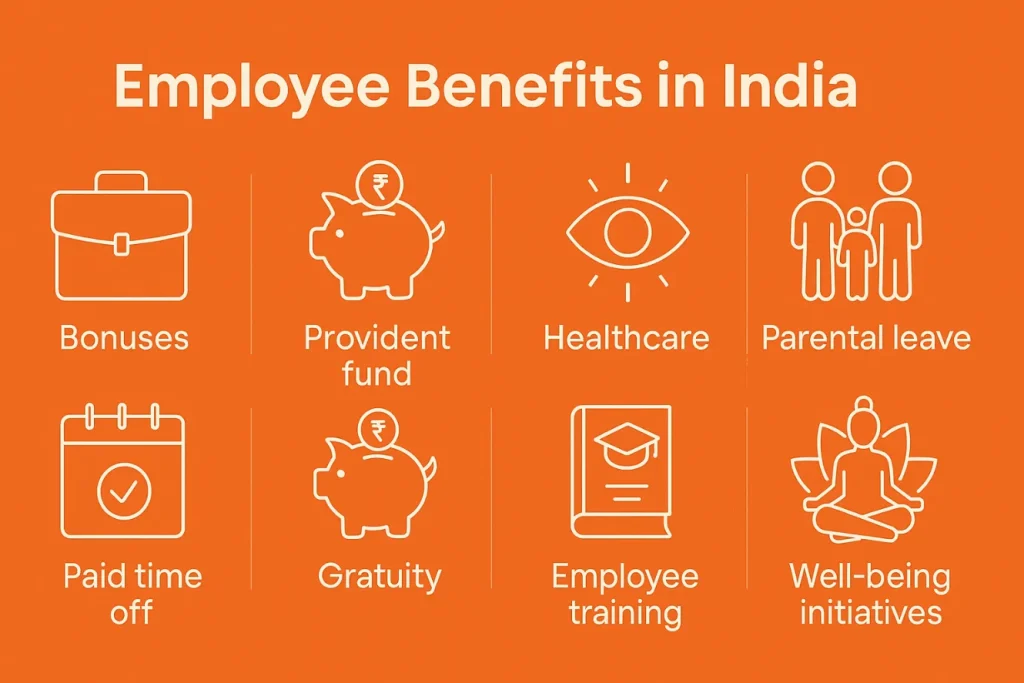
- Health insurance
- Paid leave
- Retirement savings (EPF and NPS)
- Maternity and paternity leave
- Wellness programs
- ESOP plans
- Fringe benefits like meal cards or travel support
Employee benefits are a core part of modern workplaces and are included in HR policies that explain how companies support their teams. This is why employee benefits in HRM play an important role in building a healthy and stable work environment.
These benefits became more structured after labour laws were introduced in India in the early 1900s. Today, most countries follow similar systems to protect employee health and long-term security.
Benefits of employee benefits
Good employee benefits reduce stress and create long-term stability for employees and their families.
- Lower medical and personal expenses
- Better financial planning
- Improved mental and physical wellness
- Higher job satisfaction
- Better work-life balance
- Stronger motivation and productivity
- More trust in the employer
Note: Different companies offer different benefits depending on their industry and team size. As an employee, it is important to know what you should get and how to use those benefits.
What are the types of employee benefits offered in India?
Employee benefits in India fall into two main categories: statutory benefits (compulsory and legally required) and supplemental benefits (optional and depends on the company).
| Statutory Benefits | Supplemental Benefits |
|---|---|
| Provident Fund (EPF) | Health insurance (private plans) |
| Employee State Insurance (ESI) | Wellness programs |
| Gratuity | ESOP plans and ESOP shares |
| Statutory bonus | Meal cards and food allowance |
| Maternity benefits | Travel allowance and fuel reimbursement |
| National and festival holidays | Work-from-home benefits |
| Paid leave (earned, sick, casual as per law) | Learning and development programs |
| Pension under EPS | Performance bonuses and incentives |
| Compensation for workplace injury | Childcare benefits |
| Minimum wages and overtime pay | Flexible hours or hybrid work |
A. Statutory employee benefits in India
Statutory benefits are mandatory benefits that every employer must provide under Indian labour laws. These are the foundation of employee welfare benefits, and they protect your health, income, and job security. These benefits also form the core of most company leave policies across India.
1. Employees’ State Insurance (ESI)
The Employees’ State Insurance Act, 1948, provides medical and income-related benefits to workers in case of sickness, maternity, disability, or workplace injury.
Eligibility
- Companies with 10 or more employees.
- Employees earning up to ₹21,000 per month qualify.
Contribution
- The employer contributes 3.25% of your wages.
- Employees contribute 0.75%.
What employees get
- Full medical care for you and your family
- Sickness benefit (cash support during illness)
- Maternity benefit
- Disability benefit
- Dependants benefit (if the insured person passes away due to workplace injury)
ESIC is one of the most important types of employee benefits in India because it directly protects your health and income.
2. Gratuity
Gratuity is a lump-sum amount employers pay as a “thank you” for long-term service under the Payment of Gratuity Act, 1972.
Eligibility
You qualify if you have completed 5 years of continuous service, except in cases of death or disability.
When you get it
- Retirement
- Resignation
- Superannuation
- Disablement
- Death (paid to nominees)
How it is calculated
Gratuity = (15 ÷ 26) × Last drawn monthly salary × Years of service
(Fractions above 6 months count as 1 year)
This amount is paid directly by the employer as per the Payment of Gratuity Act, 1972.
3. Employees’ Provident Fund (EPF)
The Employees’ Provident Funds Scheme, 1952, is one of the most important retirement savings schemes for salaried employees in India. It helps you build a secure financial cushion for the future and can be used during key life moments – such as paying medical bills, buying a home, funding education, or clearing a loan.
Eligibility
- Companies with 20 or more employees.
- Employees earning below ₹15,000/month must enrol.
- Employees earning above this limit can join voluntarily.
Contribution
- Employee: 12% of basic salary + DA
- Employer: 12% (split between EPF, EPS & EDLI. 3.67% is deposited into your EPF account)
EPF money grows through regular monthly contributions and earns tax-free interest. The final payouts are all completely tax exempt. You can withdraw your full EPF balance after retirement at 58, making it a reliable long-term safety net.
4. Employees’ Pension Scheme (EPS)
Employees’ Pension Scheme, 1995, is the pension component linked to your EPF account. It gives you a fixed monthly pension after you reach the age of 58, helping you maintain a steady income after retirement.
EPS works differently from EPF. It does not earn interest, and the pension amount you receive is taxable.
Key points
- 8.33% of the employer’s EPF contribution goes into EPS
- Pension calculations are based on a maximum salary of ₹15,000 per month
- The amount is limited to ₹1,250 per month
- No direct contribution from employees
- Minimum 10 years of service required
- Pension starts at age 58
- Benefits also extend to dependents in case of death
5. Employees’ Deposit Linked Insurance (EDLI)
Employees’ Deposit Linked Insurance Scheme, 1976, is the life-insurance component linked to the EPF system. EDLI provides life insurance to all EPF members.
Eligibility
If you are covered under EPF, you are automatically protected under EDLI. No separate registration is required.
Benefits
- Nominee receives 35 times the employee’s monthly salary
- Minimum payout: ₹2.5 lakh
- Maximum payout: ₹7 lakh
- No minimum service period needed
Contribution
Employer contributes 0.5% of wages (capped at ₹75/month)
This benefit gives families financial safety during unexpected loss.
6. Maternity leave benefits
Under the Maternity Benefit Act, women employees are entitled to paid leave and health protection.
Eligibility
At least 80 days of work in the past 12 months.
Benefits
- 26 weeks of paid maternity leave for the first two children
- 12 weeks for the third child onward
- 6 weeks’ leave after miscarriage
- Leave for tubectomy and pregnancy-related illness
- Mandatory crèche facilities for establishments with 50+ employees
Although paternity leave is not mandated by law in the private sector, many companies offer it voluntarily under their leave policy for employees.
7. Required paid leave (earned, casual, sick)
Leave entitlements in India differ widely based on the state and the type of organisation. However, most states follow similar rules for key categories like annual leave and sick leave.
Below are the commonly followed statutory leave standards across the country:
Earned/privilege leave
- Around 15 days per year
- Can often be carried forward
- Many companies allow encashment
Casual leave
- Usually 6–10 days, used for personal needs
- Cannot be carried forward
Sick leave
- About 12 days per year
- In some states, unused sick leave may be encashed upon exit
Paid leave rules differ by industry, but they form the foundation of employee welfare benefits in India.
8. Statutory holidays and national holidays
Every employee in India is entitled to paid public holidays. However, the total number of holidays differs from one state to another.
National holidays (compulsory)
Apart from state-specific holidays, every employer must provide paid leave on the three national holidays recognised across India:
- Republic Day (26 January)
- Independence Day (15 August)
- Gandhi Jayanti (2 October)
State holidays
Each state declares 18–28 festivals and regional holidays every year.
If you work on a public holiday, most states require:
- Double wages and
- A compensatory off
These rules form an important part of every company leave policy.
Also Read - Where Do You See Yourself in Next 5 Years: Interview Answers
B. Supplemental employee benefits in India
Supplemental benefits are optional perks that companies offer in addition to statutory benefits. They are not mandated by law but widely offered in modern workplaces. These benefits improve daily work life and help employers attract and retain strong talent in competitive industries.
1. ESOPs and long-term ownership plans
Employee stock ownership has become one of the most valued supplemental benefits in India, especially in fast-growing companies and startups. It gives employees a chance to own a part of the company they work for.
1. What is an ESOP?
An Employee Stock Ownership Plan (ESOP) is a benefit where companies offer ESOP shares to employees at a discounted price or sometimes at no cost. These shares are part of your compensation package and unlock value over time.
2. How ESOP plans work?
ESOPs usually follow a clear structure:
- You receive ESOP stock, but it unlocks over a “vesting” period.
- Once vested, you can exercise the shares at a fixed price.
- The real benefit comes when the company grows and the share price increases.
- You can later sell the shares and convert them into income or long-term savings.
This makes ESOP benefits powerful for employees who want wealth beyond a monthly salary.
3. Why companies offer ESOPs
Companies use ESOP plans to reward performance and build loyalty. Startups especially rely on employee stock ownership to attract great talent, even when they cannot offer very high salaries. That is why employee benefits for startup companies almost always include ESOPs.
4. Why employees value ESOPs
Here’s why ESOP benefits are becoming so common:
- They help employees build real wealth over time
- They make you feel like a partner in the company’s success
- They reward long-term commitment and performance
2. Company leave policy for employees
Along with statutory leave, many companies offer additional leave options to support employee well-being and create a flexible work culture. These benefits vary widely and are usually detailed in the company leave policy or employee attendance policy shared during onboarding.
2.1. Paternity leave
Paternity leave is one of the fastest-growing supplemental leave benefits in India. Even though private companies are not legally required to offer it, many employers now include it as part of their company leave policy to support new fathers.
Government employees get 15 days by rule.
Many modern workplaces now offer 2 to 3 weeks of paid paternity leave.
Most companies ask employees to complete around 80 days of service before they can use this leave. It is usually offered to biological and adoptive fathers.
Also Read - Paternity Leave Application Email Format: Rules & Policy in India
3. Health and wellness benefits
3.1. Wellness programs
- Free health check-ups
- Nutrition coaching
- Yoga or meditation sessions
- Stress management workshops
- Online therapy support
Wellness programs help employees stay active, avoid burnout and maintain good long-term health.
3.4. Gym subsidies and fitness perks
Many employers now offer fitness-related perks at work to encourage a healthier lifestyle. These perks differ from company to company but usually include:
- Gym reimbursements
- Discounted fitness memberships
- Access to sports rooms or onsite workout areas
- Fitness challenges with rewards
These office perks help employees stay physically active and reduce lifestyle-related health problems.
3.5. Mental health support
Mental health is now treated as seriously as physical health. Companies are offering new forms of support that make it easier for employees to ask for help when needed.
Examples include:
- Counselling sessions
- 24×7 mental wellness helplines
- Therapy reimbursements
- Stress and resilience workshops
With long working hours, deadlines and personal pressure, mental health support has become one of the most valued benefits in India.
4. Performance-based benefits and incentives
Performance-based benefits reward employees for the work they do beyond their regular tasks. These rewards improve motivation and show employees that their effort matters. Strong incentive plans for employees also strengthen teamwork and become a key part of the benefits of employee engagement in any company.
4.1. Bonuses
Many organisations offer bonus for employees based on performance, company profits or yearly results. These bonuses give financial stability and encourage consistent effort.
4.2. Variable pay
Variable pay is linked to measurable targets. When employees meet or exceed goals, they earn extra income on top of their salary.
4.3. Sales commissions
Sales roles often include commissions. Employees earn a percentage of sales they close, helping them increase their earnings based on results.
4.4. Recognition programs
These programs reward good work through awards, certificates, shout-outs or small perks. Recognition boosts confidence and creates a positive work environment.
4.5. Productivity perks
Some companies also offer perks like gift cards, team outings or performance coupons. Global companies sometimes include international compensation for employees working across countries.
5. Employee discounts and purchase programs
Many companies offer discount-based benefits that help employees save money on daily expenses. These programs are easy to use and often feel like every day perks at work.
5.1. Corporate and employee discounts
Employees get special prices on products or services through corporate discounts or internal employee discounts. These may include gadgets, travel, food, wellness services or entertainment.
5.2. Vendor tie-ups
Companies partner with external brands to offer exclusive deals. These office perks can include banking offers, learning courses, hotel discounts or shopping vouchers.
5.3. Employee referral rewards
When employees refer good candidates and the person gets hired, companies give cash rewards or gift perks as a token of appreciation.
5.4. Partner perks
Some organisations offer premium deals through partner platforms, giving employees access to extra savings and benefits.
Note:
The New Labour Codes 2025 will update India’s labour rules and may change certain employee benefits. We will share the updated details once the new codes are officially implemented.
Employee benefits offered by top companies in India
Employee benefits in India vary widely across industries. Some companies focus on strong health cover, others offer ESOPs, generous parental leave, or flexible work models.
1. Google employee benefits
Google employee benefits are known for being some of the most comprehensive in the industry. Popular Google employee perks include:
- Strong health insurance
- Mental-wellness programs
- Hybrid work options
- Global learning opportunities
- Competitive pay
- Equity
- Retirement plans
- Onsite wellness spaces
- Childcare support
- Community programs
The company also offers generous leaves. Here are the details on Google parental leave policy.
Google maternity leave: New mothers get 24 weeks of leave, while adoptive and surrogate parents get 18 weeks of paid leave.
Google paternity leave: Paternity leave is 18 weeks.
2. Microsoft employee benefits
Microsoft offers a mix of flexibility, well-being support, and strong compensation to help employees grow in their careers and personal lives.
- Hybrid work model
- Health and wellness cover
- Paid vacation and holidays
- Parental and caregiver leave
- Performance bonuses and stock awards
- Learning and certification support
- Global employee discounts
3. Apple employee benefits
Apple offers financial and family-oriented benefits designed to help employees feel supported in every stage of life.
- Apple employee discount: 25% off iPods, iPads, and Macs; 50% off most Apple software; 25% off AppleCare
- Comprehensive medical and mental-health coverage
- Family support, including fertility care, childcare help, and paid parental leave
- Education reimbursement and Apple University learning programs
- Retirement savings support and stock grants
- Paid time off for caregiving, renewal, and personal needs
4. Amazon employee benefits
The perks of working at Amazon include strong healthcare coverage, career-growth programs, and flexible leave options for parents.
- Amazon maternity leave: Up to 26 weeks for birth mothers; 12 weeks for adoptive mothers
- Amazon paternity leave: 6 weeks of fully paid leave for fathers
- Free mental-health counselling and Employee Assistance Program
- Amazon Extras: Discounts on travel, insurance, entertainment, and more
- Anytime Pay: Access to earned salary before payday
- Cancer support programs and telemedicine services
5. Salesforce employee benefits
- Life insurance and accident cover for employees and dependents
- Medical insurance plus extra medical coverage
- Child care, parental care, partner/self-care
- Employee leave and voluntary time off
- Employee Stock Purchase Plan (ESPP)
- Financial planning tools like Bright Plan
6. Oracle employee benefits
Oracle offers amazing lifestyle benefits for employees in India. Key highlights:
- Health cover for employees and families, including dental, vision, mental health, disability, diagnostics
- Hospitalisation insurance + outpatient cashless care
- EPF membership, superannuation plan, National Pension Scheme
- Income-protection insurance
- Childcare services, onsite gym and recreation (pool, TT, billiards)
- Paid time off, maternity and paternity leave, sabbaticals
7. ServiceNow benefits
Here are the core benefits ServiceNow offers employees in India:
- Time off: Vacation, company-wide well-being days, sick leave, bereavement leave
- Family benefits: Maternity/paternity leave, WFH options, family medical leave
- Health cover: Comprehensive health insurance
- Support: Skill training, degree assistance, onsite exposure
8. Atlassian perks and benefits
Atlassian offers people-first benefits in India, focusing on well-being, learning, and family support. Employees get:
- Flex Wallet for personalised reimbursements
- Monthly remote-work allowance
- Mental health support and coaching
- Mediclaim, life, and accident insurance
- 26 weeks maternity + 20 weeks parental leave
- Learning budget and tuition support
- Corporate discounts, NPS, VPF, child-care support, and meal wallet
9. Netflix employee benefits
Key perks at Netflix include:
- Unlimited vacation and flexible hours
- Parental leave with take-what-you-need approach
- Global fertility, adoption, and surrogacy benefits
- Mental-health support and coaching
- Top-of-market pay and salary-vs-stock choice
- Fully vested 10-year stock options
- Relocation help and work-from-rideshare program
10. Uber employee benefits
Uber offers strong health cover and family-friendly perks. Highlights include:
- Medical, life, and disability insurance
- Monthly Uber ride and Eats credits
- Wellness reimbursements
- Paid parental leave
- Flexible time off + sabbatical after 5 years
- Mental-health counselling
- Family planning and Cleo support
- Employee stock purchase plan
11. TCS employee benefits
TCS offers stable benefits focused on learning and work-life balance. Key perks include:
- Health and life insurance
- Annual health check-ups
- Performance bonuses
- Onsite gym, cab, and childcare
- Global learning programs
- Sabbaticals and parental leave
- Retirement and mobile bill benefits
12. Infosys employee benefits
Infosys offers well-rounded benefits covering health, learning, and flexibility. Perks include:
- Medical and life insurance
- Annual health checks and wellness programs
- Global training and degree assistance
- Performance bonuses
- Flexible hours and remote work
- Parental leave and sabbaticals
- On-campus gyms, cafeterias, childcare
13. Wipro benefits plan
Wipro offers a broad mix of wellness, financial, and family-friendly benefits. Highlights include:
14. Cognizant employee benefits
Cognizant offers strong health and financial support. Key perks include:
- Medical, dental, vision, life, disability insurance
- EAP, fertility and immigration support
- Unlimited PTO, 7 sick days
- 8-week maternity and 4-week paternity leave
- ESPP with 10% discount
- Learning programs and volunteer time off
15. Tech Mahindra employee benefits
Tech Mahindra offers practical benefits that support health, family needs, and financial stability. Key perks include:
- Health, dental, vision, life, disability insurance
- PTO, public holidays, bereavement leave
- Work-from-home and flexi-work options
- Parental care leave up to 6 months
- Salary advance and retirement plan
- Phone bill reimbursement and relocation bonus
- Employee discounts and transport allowance
16. Tata employee benefits
Tata offers health cover, financial security, and work-life support.
- Medical, dental, vision, life insurance
- Wellness programs and mental health support
- Pension, PF, gratuity, performance bonuses
- Paid leave, maternity/paternity leave
- Flexible work options and sabbaticals
- Childcare help
- Job training, education support, mentorship
- Discounts on Tata products and services
17. Capgemini benefits
- Travel insurance and Tastecard+ dining discounts
- Electric/hybrid company car options
- Holiday trading (annual window)
- Medical plan (specific grades) + Doctor@Hand
- Dental cover, personal accident insurance
- Peppy support (men’s/women’s health, fertility, menopause)
- Thrive app for stress and anxiety
- Non-contributory pension plan
- 26 days annual leave + public holidays + paid parental leave
- Flexible working hours and location
- Laptop, SIM card, and allowance for remote work
18. Deloitte employee benefits
Deloitte focuses on helping employees thrive physically, mentally, and financially.
- Additional medical leave for major conditions
- Mental health support (Live Well program)
- Sabbatical for volunteer work
- Provident fund, gratuity, accident & life insurance
- Salary advances + loans
- Car lease program
- Daycare support + transport reimbursement for expectant mothers
- Employee discounts
- Up to 39 days PTO
19. PwC employee benefits
- Medical, dental, vision insurance
- Flexible working + flex dress
- Breakfast, snacks, free coffee
- Paid study support + exam leave
- International opportunities
- Staff discounts + corporate mobile plan
- Paid volunteer days
- Buy additional leave
20. EY employee benefits
Ernst and Young employee benefits include:
- Medical, life, accident, travel insurance
- 25 days vacation + special leaves
- Flexible work, inclusive culture
- Professional certifications, EY Badges, Tech MBA
- Wellness clubs, sports teams, health events
- Celebrations, referral bonuses, alumni network
21. KPMG employee benefits
- Flexibility: WFH, part-time, custom hours
- Health: Annual checks, counselling, well-being tools
- Insurance: Life, Mediclaim, accident, COVID cover
- Safety: App-based seat booking
- Leave: Shared leave, caregiver leave, adoption leave, sabbatical
22. JP Morgan employee benefits
Here are the key JP Morgan benefits:
23. Wells Fargo employee benefits
- Health plans: Medical, dental, vision from day one
- Well-being: Tools, coaching, and support for physical and mental health
- Paid time off: Flexible options for personal needs and life events
- Education benefits: Tuition reimbursement and paid learning programs
- Financial security: 401(k) with up to 6% match, stock purchase plan, banking discounts
- Family support: Paid parental leave, caregiving leave, adoption/surrogacy reimbursement
24. HSBC employee benefits
- Share ownership: Opportunities to own HSBC shares through employee share plans
- Well-being support: Physical, mental, social, and financial well-being programs
- Health benefits: Medical plans, health assessments, wellness tools, and gym access
- Mental health: 24/7 confidential counselling, mindfulness apps, and manager training
- Financial security: Retirement savings, life insurance, financial education
- Flexible working: Options for remote work, flexible hours, and time off for important life events
25. Amex employee benefits
Here are the key American Express employee perks:
- Health coverage: Medical, dental, vision, life insurance, disability, and onsite wellness centres
- Mental well-being: Free counselling and Healthy Minds resources
- Financial benefits: Competitive pay, incentives, savings programs
- Flexible work: Amex Flex hybrid options and work-life support
26. GE employee benefits
- Day-one medical, dental, and vision coverage for you and dependents
- Two medical plan options
- Free preventive care and selected preventive prescriptions
- Emotional well-being support and virtual behavioural care
- Health Advocacy through Accolade
- Employee Assistance Program (24/7 counselling)
- 2 to 6 weeks paid time off based on service
- Up to 3 weeks paid bonding leave for birth or adoption
- Short-term disability from day one (up to 26 weeks)
- Long-term disability at 50% pay (employee-paid)
27. UPS employee benefits
- Competitive salary with performance bonuses
- Private medical insurance
- Paid time off for work-life balance
- Clear promotion and growth opportunities
- Diverse, international work environment
- Training and education via UPS University
28. Coca Cola benefits
- Competitive pay, incentives, and KO Total Rewards
- Medical, dental, vision, and wellness programs
- Mental-health support and free counselling
- Financial education and retirement resources
- Flexible work options and inclusive culture
- Career development, learning tools, and mobility opportunities
29. PepsiCo employee benefits
- Retirement plans to help you save for the future
- Well-being programs for physical, emotional, and financial health
- Work/life benefits to support balance and daily needs
- Comprehensive medical and insurance options for you and your family
30. Samsung employee benefit
- Samsung corporate discount offers exclusive lower prices on mobiles, laptops, TVs, and appliances for eligible corporate users.
- Samsung employee discount gives staff 10 to 30% savings, free delivery, trade-in offers, and no-cost EMI options on select products.
31. Adobe employee benefits
- Well-being reimbursement up to $600/year
- Learning Fund for education support
- Mental health care and counselling
- 401(k) + ESPP for financial well-being
- Vacation, sick leave, sabbatical
- Discounts on travel, fitness, and more
32. Accenture employee benefits
- PTO, 10 public holidays, parental & bereavement leave
- Medical coverage, disability support, assistive devices
- Fertility, adoption, childcare benefits
- Flexible work options
- Learning programs, certifications, career development
33. IBM employee benefits
- Group life and disability insurance
- Wellness activities: yoga, relaxation sessions, and annual health check-ups
- Employee Assistance Program (EAP) for counselling support
- Flexible working hours and work-from-home options
- Paid maternity and paternity leave
- Childcare support in select offices
- Paid vacation and sick leave
- Retirement and pension plans
Modern employee benefits and workplace trends in India
Companies are now offering benefits that go beyond insurance and leave. These modern employee benefits focus on flexibility and everyday comfort. They help employees manage life better while supporting long-term career goals. Many of these perks are becoming common across tech and global companies as the future of employee benefits continues to evolve.
1. Remote and hybrid work models
Remote and hybrid setups remain one of the biggest trends. Employees can split their time between home and office, which saves travel time and creates better work life balance.
2. Flexible working hours
More companies now allow employees to choose work timings that suit their routines. This helps parents, caregivers, and people with long commutes manage their day better.
3. Unlimited or flexible PTO
Some modern workplaces offer unlimited PTO or generous time-off policies. These systems are built on trust and give employees more control over their rest and personal time.
4. Work-from-home support allowances
Employees working remotely often receive small allowances to cover home office costs like ergonomic chairs, electricity, or basic workspace needs.
5. Internet, meal and travel reimbursements
Companies now offer practical fringe benefits such as:
- Internet bill support
- Meal reimbursements
- Transport allowances for hybrid days
These perks cut down daily expenses and make work more comfortable.
6. Continuous skill development
Upskilling has moved from “optional” to “essential.” Companies now sponsor training courses, certifications and learning platforms. This helps employees grow faster and stay confident in a changing job market.
7. Better parental benefits
Beyond maternity leave, more organisations are improving paternity leave, adoption leave, and parental support programs. These benefits help employees focus on family without compromising their careers.
8. Wellness-first workplaces
Workplaces are placing a stronger focus on mental health, preventive care, and daily well-being. This includes:
- Therapy support
- Stress management sessions
- Well-being days
- Digital wellness tools
It has become a major part of the future of employee benefits, especially for younger employees.
9. Stronger corporate discount partnerships
Companies are partnering with brands to offer savings on shopping, travel, electronics, fitness and learning. These partnerships add practical value and are becoming attractive additions to compensation packages.
Wrapping up
Choosing the right company is not just about salary. Employee benefits matter just as much because they shape your long-term security and overall happiness at work. Use this guide to compare perks, understand what truly supports your growth, and make smarter career decisions.
Ready to work with companies that truly value employees? Find the top IT jobs with strong employee benefits on Hirist.
FAQs
Standard statutory benefits in India include Provident Fund (PF), Employee State Insurance Corporation (ESIC) coverage, gratuity, paid leave, maternity benefits, overtime pay, and health insurance, depending on specific company policies and labor laws.
No, under the Payment of Bonus Act, only employees earning a basic salary of up to ₹21,000 per month are legally eligible for a statutory bonus. Those earning more may receive bonuses, but this is based on company policy rather than legal requirement.
Accenture offers state-based Paid Time Off (PTO), 10 public holidays, and 26 weeks of parental leave for primary caregivers. HCL provides 18 flexible annual/sick leaves, special event leaves, and 26 weeks of paid maternity leave for eligible women employees.
The Samsung EPP allows employees to access exclusive discounts on products like phones, laptops, and TVs. Staff typically receive up to 30% off selected items, with some offers extending to family and friends via special links.