
Secondslope - AI Enterprise Architect - Agentic Systems
Posted on: 29/09/2026
Job Description
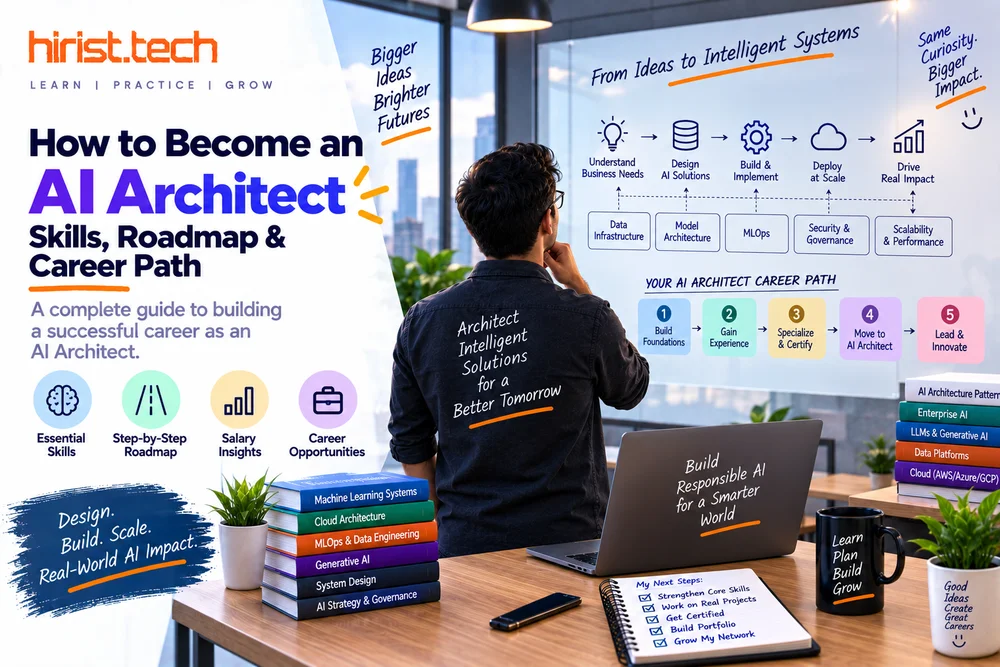
AI Enterprise Architect
About us
Second Slope: bringing determinism to non-deterministic systems.
Enterprises are betting on AI that can't yet prove it works. We're a well-funded start-up building the fix from scratch, and you'll help shape it from day one. You'll work alongside industry-leading AI experts and serial founders, and take on niche, unsolved problems with academic experts from leading North American universities. If you'd rather build something meaningful than maintain something that already exists, this is the seat.
Role summary
Own the architecture and engineering of enterprise AI across its full lifecycle: designing and building AI and agentic systems, deploying them into production, scaling them across the enterprise, and operating them responsibly over time. AI is the organizing principle. Software and data engineering practices are applied in service of AI systems, so the code, pipelines, and platforms beneath them are built to make models and agents reliable, evaluable, and safe. You translate business strategy into platforms and solutions that are secure, cost-aware, and governed by design, and you are accountable for their technical integrity from first prototype through steady-state operations.
Architecture and design:
- Define target-state architecture, reference patterns, and standards for LLMs, agentic workflows, RAG, classical ML, and the data and integration layers beneath them
- Architect agentic systems end to end: orchestration, tool and API integration, memory and context management, human-in-the-loop controls, and multi-agent coordination
- Guide build-vs-buy-vs-partner decisions, model selection, and the prompting vs. retrieval vs. fine-tuning trade-offs
- Run architecture reviews and design authority forums across AI, application, and data workstreams
AI-led engineering (software, data, and AI):
- Set engineering standards for AI systems: evaluation-driven development, versioning of prompts, models, agents, and data, and test harnesses covering prompt regression, agent behavior, and safety
- Build production-grade AI applications: service and API design, modular and reusable components, clean separation of agent logic, business logic, and infrastructure, and secure coding
- Architect the data foundation for AI: batch and streaming pipelines, lakehouse and warehouse layers, feature stores, vector and knowledge stores, and pipelines for unstructured and multimodal data (chunking, embedding, indexing, refresh for RAG)
- Define data contracts, quality checks, lineage, and observability so that data feeding AI is trusted, governed, and monitored
- Own CI/CD and release engineering for models, agents, and applications: infrastructure as code, containerization, environment promotion, feature flags, release gating, and rollback
- Integrate AI into ERP, CRM, data platforms, and legacy estates through APIs, event-driven patterns, and standard protocols
- Define release readiness criteria covering quality, safety, security, performance, and compliance before anything reaches production
- Manage technical debt, dependency and supply-chain risk, and documentation standards across the AI codebase and data estate
Scaling and operations:
- Architect for scale: multi-tenancy, model gateways and routing, caching, throughput and latency management, resilience, and capacity planning
- Own FinOps for AI: unit economics, inference and data-platform cost optimization, and usage governance across teams and clients
- Set up AgentOps/LLMOps/MLOps/DataOps and observability: tracing, monitoring, drift and quality detection, incident response, and continuous evaluation and improvement using production feedback
- Drive the path from pilot to platform, turning one-off solutions into industrialized patterns that multiple programs can adopt
Responsible AI and governance:
- Embed responsible AI by design at every stage: security, privacy, access control, data governance, auditability, bias and safety testing, guardrails, and explainability
- Align architecture with regulatory and policy requirements and internal risk frameworks
- Define human oversight models, escalation paths, and accountability for autonomous and semi-autonomous agent actions
- Manage model, vendor, and third-party risk, including lifecycle management, deprecation, and rollback strategies
Leadership and engagement:
- Support pre-sales and client delivery: solution shaping, technical due diligence, executive briefings, and proofs of value designed to scale
- Mentor junior architects and engineers across software, data, and AI, and contribute to internal standards, playbooks, and enablement
Required qualifications:
- 12+ years in enterprise, solution, software, or data/AI architecture, with at least 1+ years designing and running production AI systems
- Demonstrated track record of taking AI from prototype to production to enterprise scale, not just pilots
- Strong engineering foundation applied to AI: Python plus at least one other language (e.g., Java, Go, TypeScript), API and microservices design, testing, CI/CD, containers, Kubernetes, and infrastructure as code
- Strong data engineering foundation: batch and streaming pipeline design, SQL and distributed processing (e.g., Spark), orchestration, lake house/warehouse architectures, and data modelling
- Hands-on knowledge of LLM application patterns: RAG, vector stores, agent frameworks, evaluation and observability tooling, and model gateways
- Deep experience with at least one major cloud (AWS, Azure, or GCP) and its AI, data, and compute services
- Working knowledge of security architecture, responsible AI, AI risk management, and regulatory frameworks
- Excellent communication with both C-level stakeholders and engineering teams
Preferred:
- Experience in regulated industries (BFSI, pharma/healthcare)
- Familiarity with MCP, agent interoperability standards, and agent governance tooling
- Experience with data catalog, lineage, and data quality platforms, and with event streaming systems (e.g., Kafka)
- Cloud architecture or TOGAF certifications; publications, patents, or public speaking in AI
Success measures (first 12 months):
- A ratified reference architecture, engineering standards, and governance framework adopted across programs
- Multiple AI systems moved from pilot to production and scaled, with measurable business impact
- Standardized CI/CD, automated testing, and evaluation gates in place for models, agents, and applications
- Governed, observable data pipelines with defined quality SLAs feeding production AI systems
- Production observability with defined SLAs for quality, safety, latency, and cost
- Reduced time-to-deploy and unit inference cost through reusable patterns
- Zero unmitigated critical findings from security, privacy, or responsible-AI reviews

Did you find something suspicious?
Similar jobs that you might be interested in
Posted by
35
Posted in
AI/ML
Functional Area
Technical / Solution Architect
Job Code
1675444