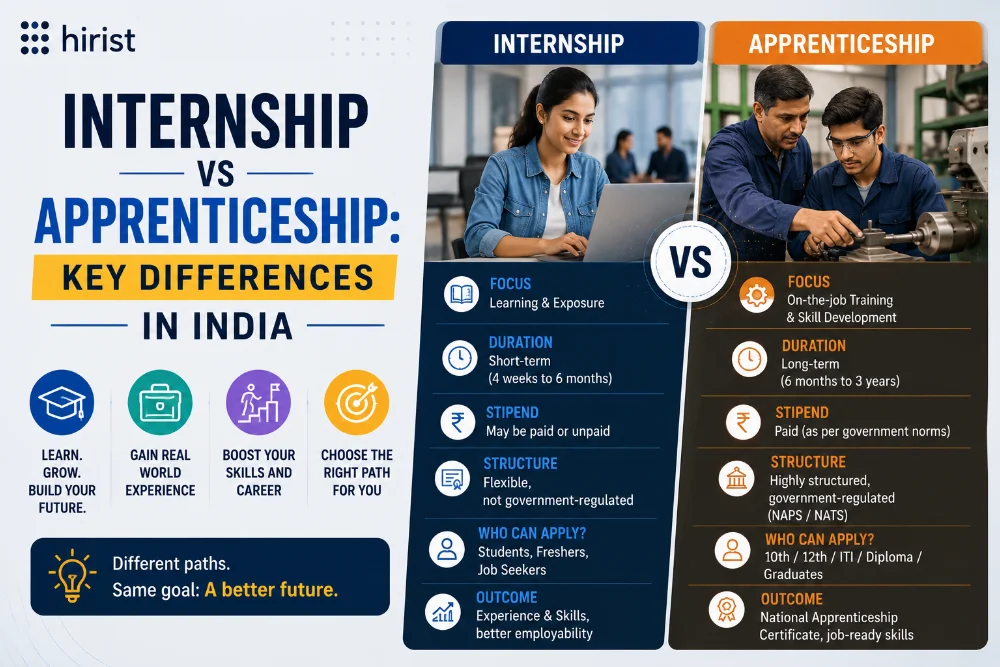
Choosing between an internship vs apprenticeship is a common challenge for students and freshers in India. Both options offer practical experience, but they serve different career needs. An internship usually helps you understand a job role and a work environment. An apprenticeship focuses on learning a specific skill over a longer period. Many people confuse the two and make a rushed choice, which can affect income and future job options. In this blog, we explain the 12 key differences between internship vs apprenticeship in India and share practical tips to help you choose the right career path.
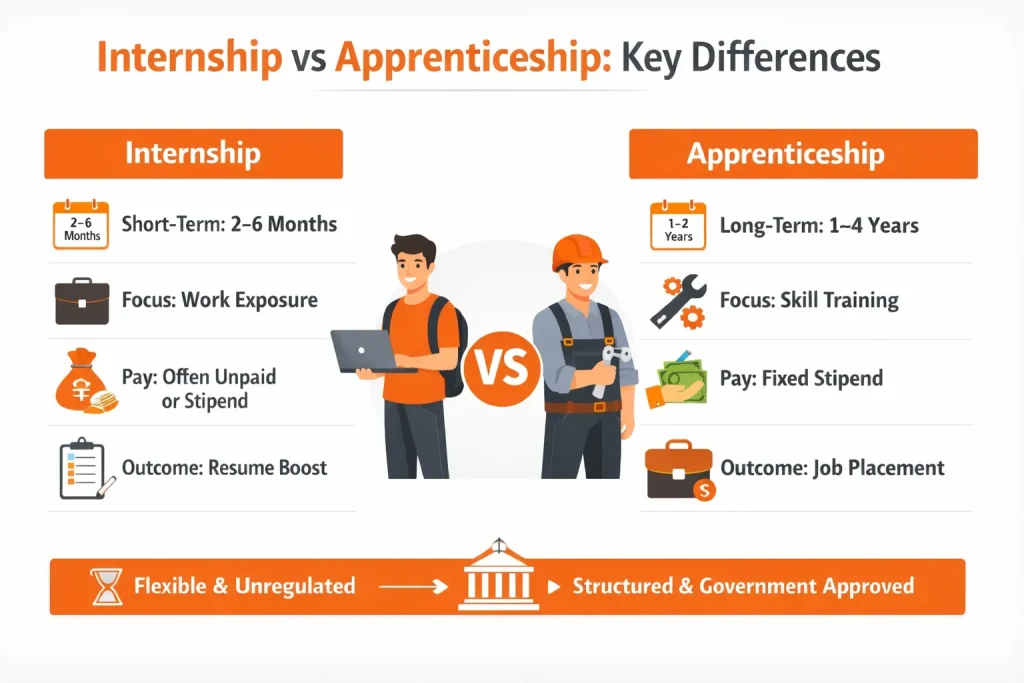
Internship vs apprenticeship – Meaning and definition
Internship and apprenticeship are two ways to gain work experience in India. People often use these terms interchangeably because they share some similarities, but they differ in purpose and career outcomes. Before discussing apprenticeship and internship differences, let us first understand what each term means.
What is an internship?
An internship is a short-term work experience that helps students and freshers understand how a job works in real life. It allows you to apply classroom learning in a professional setting and learn daily work responsibilities. This experience helps you build skills and decide if a career path suits you before starting full-time work. Many colleges also include internships as part of their course requirements. These roles are usually offered during semester breaks or summer periods.
Features of an internship:
- Most internships last a few weeks or a few months.
- Some offer a stipend while others focus only on learning.
- Internships are common in fields like IT, marketing, finance, engineering, media, and biotech.
Fun Facts:
- India has seen a 103% rise in internship postings in the last three years.
- According to the India Skills Report 2025 by Wheebox, 93.22% of students in India want to do internships before starting full-time jobs.
What is an apprenticeship?
An apprenticeship is a long-term and paid training program where you learn a specific job or trade by working under experienced professionals. It focuses on building job-ready skills through daily work experience. Many apprenticeship programs follow government guidelines and offer recognised certificates after completion. They are suitable for people who want stable employment and technical expertise.
Features of an apprenticeship:
- Apprenticeships usually last from one year to several years based on the role.
- You earn a stipend during this period.
- Apprenticeships are common in manufacturing, IT, energy, construction, healthcare, and transport.
12 Key differences between an Internship and an Apprenticeship
Understanding the difference between internship and apprenticeship in India helps you avoid wrong career choices and pick the option that truly supports your job goals.
Internship vs apprenticeship – Key differences table
| Basis | Internship | Apprenticeship |
|---|---|---|
| Purpose | An internship helps students and freshers understand how a job role and workplace function. The main goal is exposure and learning before full-time work. | An apprenticeship aims to train a person for a specific job role. The goal is to build strong skills that lead to stable employment. |
| Duration | Internships usually last 4 weeks to 6 months. Many align with summer breaks or semester timelines. | Apprenticeships last 1 to 4 years depending on the role and industry. They require long-term commitment. |
| Payment Structure | Some internships pay a stipend while others are unpaid. Payment depends on the company and role. | Apprenticeships are paid by law. Apprentices receive a fixed monthly stipend during training. |
| Legal Framework in India | Internships are not governed by a single central law. Rules depend on company policies or college guidelines. | Apprenticeships follow the Apprentices Act, 1961. Employers must follow government rules for pay and training. |
| Type of Experience | Internships offer a mix of observation and basic task handling. Learning happens through assisting teams. | Apprenticeships focus on daily hands-on work. Learning happens by doing the job under supervision. |
| Skill Development Focus | Skill development is broad. Interns learn communication, teamwork, and basic job skills. | Skill development is role-specific. Apprentices train deeply in one trade or profession. |
| Eligibility Requirements | Most internships require you to be a student or recent graduate. Some also accept freshers. | Apprenticeships usually require to be Class 10 or 12 pass. Some roles may ask for ITI or diploma qualifications. |
| Work Schedule | Internships can be part-time or full-time. Many allow flexibility with college classes. | Apprenticeships are mostly full-time. Flexibility with classes is limited or not available. |
| Certification or Credential | Internships may provide a completion certificate. It is useful but not always recognised nationally. | Apprenticeships often provide government-recognised certificates after successful completion. |
Internship vs Apprenticeship
Career Outcome | Internships improve resumes and help with entry-level jobs. Full-time offers are possible but not guaranteed. | Apprenticeships often lead to direct employment. Many companies retain trained apprentices.
Mentorship Structure | Guidance is informal. Interns may work with multiple team members or managers. | Mentorship is structured. Apprentices work under skilled professionals for continuous guidance.
Industries Commonly Offering It | Internships are common in IT, marketing, finance, engineering, media, and biotech. | Apprenticeships are common in manufacturing, construction, IT, healthcare, energy, and transport.
Internship vs apprenticeship – Average salary or compensation
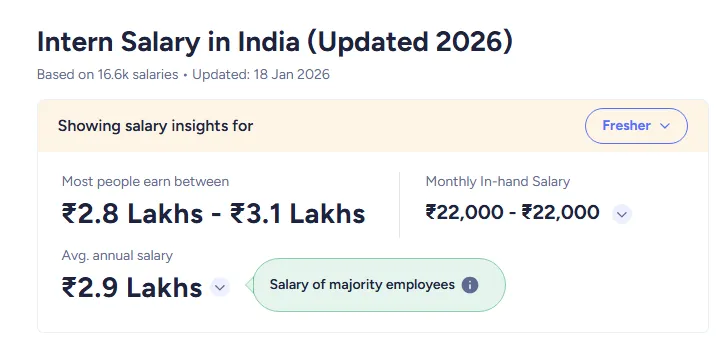
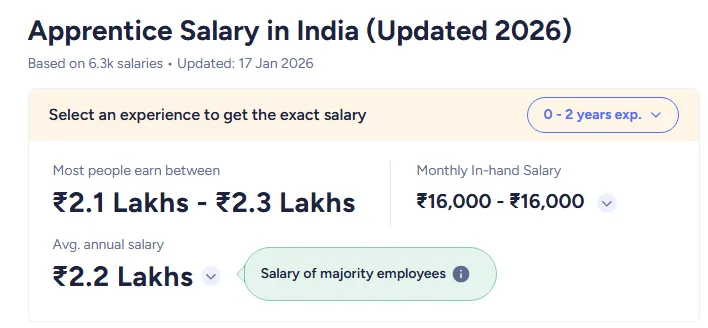
Average compensation highlights a key difference between internship and apprenticeship in India, with internships offering higher short-term pay and apprenticeships providing stable and regulated stipends.
| Salary Factor | Internship (Fresher) | Apprenticeship (0–2 years) |
|---|---|---|
| Average Annual Salary | ₹2.9 Lakhs | ₹2.2 Lakhs |
| Typical Salary Range | ₹2.8L – ₹3.1L | ₹2.1L – ₹2.3L |
| Monthly In-hand Pay | ₹22,000 | ₹16,000 |
Note: Compensation data is taken from AmbitionBox.
Also Read - Data Analyst Internship: Apply, Eligibility, Skills & Stipend
How to find the right Apprenticeship or Internship?
Here are some steps you can follow to choose the right apprenticeship or internship for your career needs.
- Identify your immediate goalStart by understanding why you want this experience. Some students need an internship to complete college requirements. Others want work exposure before a full-time role. Apprenticeships suit those who want to learn a specific job skill and work toward long-term employment.
- Decide the type of program you needOnce your goal is clear, choose between internship vs apprenticeship. Internships focus on short-term learning and workplace exposure. Apprenticeships focus on structured training and skill mastery over a longer period.
- Search from reliable sourcesLook for opportunities through college placement cells, official company websites, or recognised government apprenticeship portals. These sources provide genuine roles and clear information.
- Compare important details carefullyShortlist options by checking duration, stipend, work schedule, and learning scope. Make sure the role matches your availability and expectations. Avoid listings that are unclear about responsibilities.
- Apply with preparationAfter selecting suitable roles, update your resume based on the program requirements. Apply only to positions that align with your career direction and learning goals.
Wrapping up
Choosing between internship vs apprenticeship depends on your career goals and the skills you want to build. Understanding the apprenticeship and internship difference helps you avoid wrong choices and plan your career with clarity. Both paths offer value when chosen wisely.
If you are looking for the best career opportunities in IT, visit Hirist. It is India’s top job portal for tech professionals.
FAQs
An internship focuses on short-term work exposure and learning about a job role. An apprenticeship focuses on long-term skill training for a specific job and is usually paid and regulated.
It depends on the individual situation. Internships are better for career exploration and resume building. Apprenticeships are better for learning a job skill and securing stable employment.
An apprentice follows a structured program under government rules and receives a stipend. A trainee usually undergoes short-term company training without formal certification or legal backing.
Yes. Many apprenticeships in IT, healthcare, and technical fields accept graduates. Some programs even prefer candidates with diplomas or degrees.
No, an apprenticeship is not a permanent job. However, many companies offer full-time roles after completion if performance is good and vacancies are available.
In most cases, internships pay more in the short term. Apprenticeships pay lower initially but provide steady income and long-term job security through skill development.
Internships help with early career growth and entry-level jobs. Apprenticeships support long-term career advancement in skill-based and technical roles.
It is possible but not common. An employer may offer an apprenticeship after an internship if they run both programs and see strong performance.
The apprenticeship and internship difference in India lies in duration, payment, legal regulation, and career outcomes. Internships are short and flexible, while apprenticeships are paid, regulated, and skill-focused.
Internships usually target students and fresh graduates. Apprenticeships are more flexible, though some programs have minimum and maximum age limits as per government rules.