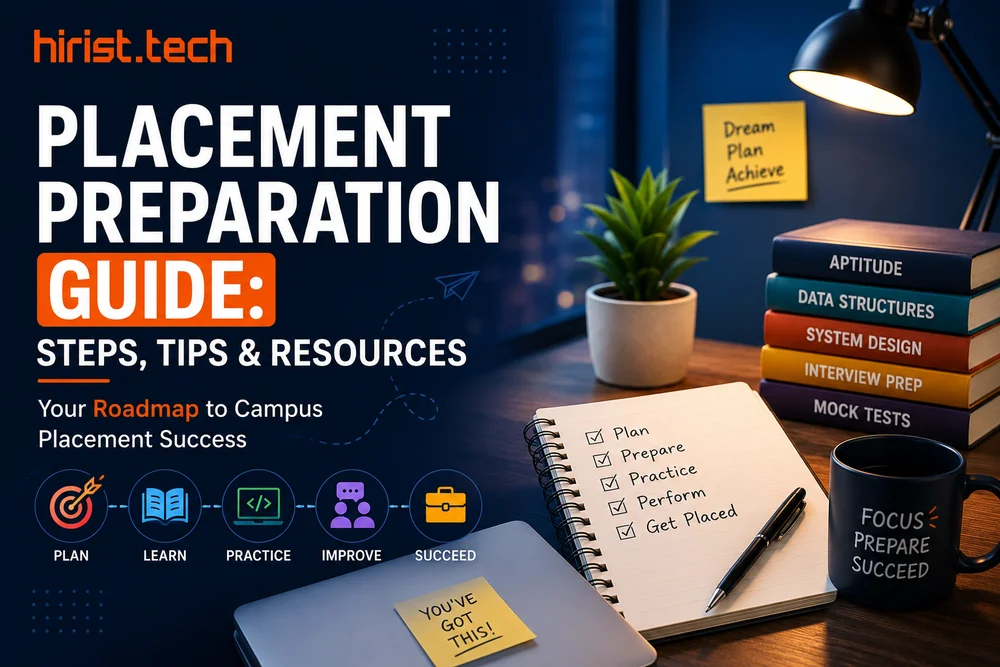
Placement preparation is important if you want to secure a good job while you are still in college. It saves you from a long job search later and gives your career a strong early push.
That’s why we at Hirist, the number one IT job portal in India, have created this simple and clear step-by-step placement preparation guide for students.
In this guide, you will learn:
- Aptitude preparation for placement
- Resume building
- Interview preparation
- Group discussion strategies
- Company-specific placement preparation tips
You will also get access to free placement preparation resources to make your journey easier. Our goal is to give you a plan that is practical and easy to follow.
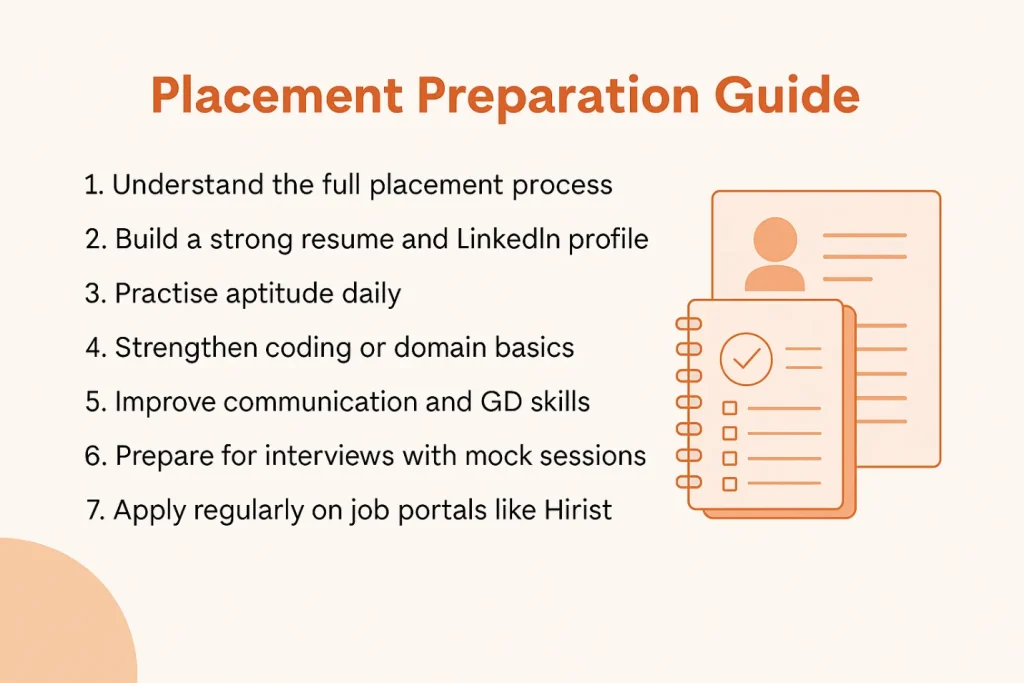
What is placement and what are the different types of placements?
Placement is the stage where companies start selecting students for job roles through tests and interviews organised by the college or through online drives. There are three main types of placements that students usually come across.
- On-campus placements: Companies come directly to your college and you compete with students from your own batch only. The process is faster and more organised.
- Off-campus placements: You apply through job portals or company websites. Here, you compete with students from many colleges across India.
- Pool-campus placements: Two or more colleges are combined for a single placement drive. Companies use this when they want a larger group of students at once.
Note: Some students also get hired through Pre-Placement Offers (PPOs) or hackathon-based interviews.
Understanding the placement process
Placement preparation becomes easier when you understand how the entire process works and what each stage covers.
So, here is the complete process to help you understand:
| Stage | What Happens | |
|---|---|---|
| 1 | Pre-placement talk | The company explains the job role, work culture, and salary. This helps you understand what they expect and what the job looks like. |
| 2 | Aptitude test | This round checks your logical thinking, maths basics, and verbal ability. Many students get filtered here, so daily placement preparation aptitude practice is important for a strong score. |
| 3 | Coding or technical test | Engineering and IT roles usually include coding questions or technical MCQs based on core subjects. |
| 4 | Group discussion | Some companies use group discussions (GDs) to test teamwork and communication skills. |
| 5 | Technical interview | You explain your projects, problem-solving approach, and subject knowledge. The interviewer wants to see your technical knowledge. |
| 6 | HR interview | This round checks your communication style and overall fit for the job role. It is the final step in landing your dream job. |
| 7 | Psychometric tests (optional) | A few companies use these tests to understand your personality and work style. |
Note:
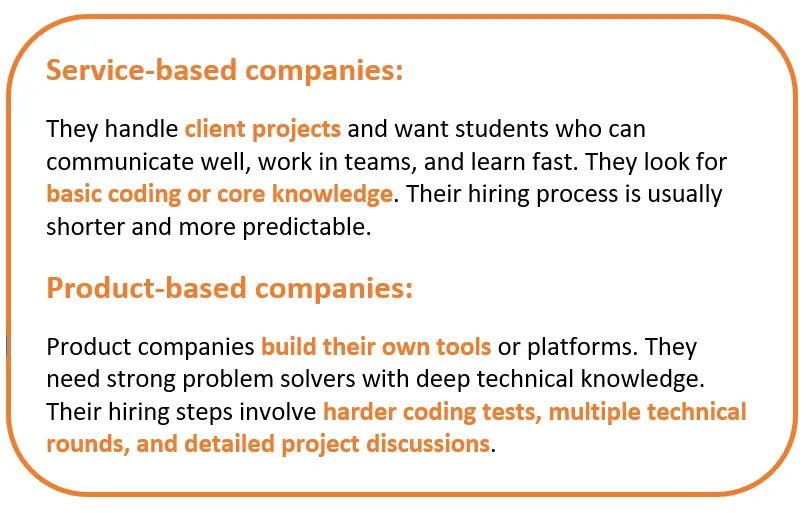
Different companies follow different hiring styles
Before we go deeper into placement preparation, it helps to know that hiring patterns change based on the type of company.
Also Read - How to Answer “What is Your Current CTC and Expected CTC?” in Interviews
Step-by-step guide for placement preparation
Here, we will walk you through five clear steps that make placement preparation easier to follow and easier to apply in your daily study routine.
Step 1: Build a strong resume and online presence
Your resume and online profiles are the first things a company sees to shortlist you. So this step is very important, and it is the foundation of your placement preparation.
1.1. How to build a powerful resume
- Choose the right resume format: Use reverse-chronological if you have internships. Use a simple skills-first format if you want to highlight projects and core skills.
- Write a good resume summary: Do not copy a generic summary. Write 3 to 4 lines on your own to describe your skills and achievements and try to use numbers if possible.
- Focus on technical and soft skills: Create two separate sections. Add only skills that match the job description and that you can explain.
- Add project and internship details: These sections can set you apart from others. Write about your key projects and internship experience using strong bullet points and action verbs. Use numbers to show value.
- Do not forget certifications: Create a small section for certificates from any verified source.
- Add links: Place your LinkedIn, GitHub, or portfolio link in the header. Make sure every link works.
- Proofread and save in the right format: Check grammar and formatting. Save the resume as a clean PDF.
- Avoid common resume mistakes: Do not add long paragraphs or unrelated hobbies. Do not list skills you cannot explain in an interview. Keep it honest and simple.
Also Read - “What Are Your Hobbies” Interview Question with Sample Answers
1.2. How to make your resume ATS-friendly?
An ATS is an Applicant Tracking System. It is a software tool used by companies to scan and shortlist resumes to speed-up the hiring process.
Most big recruiters like TCS, Infosys, Cognizant, Accenture, Wipro, HCL and Capgemini use ATS to filter thousands of student resumes in a few seconds.
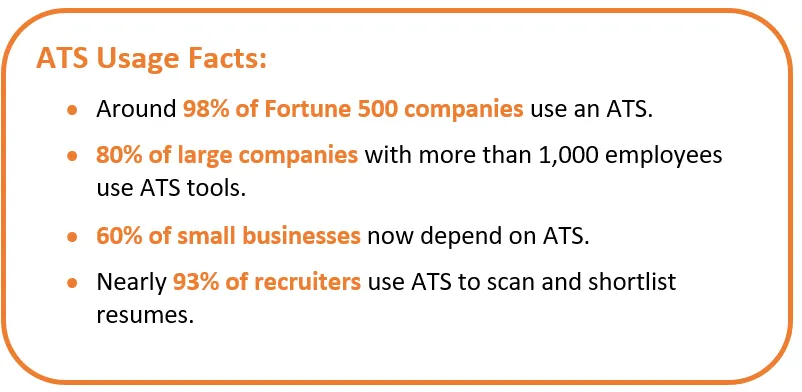
Here is how to make your resume ATS-friendly:
- Add job-specific keywords from the company’s job description.
- Use simple fonts like Arial or Calibri so the ATS can read your text.
- Save your resume as a PDF unless the company asks for another format.
- Avoid tables, icons and graphics because ATS scanners cannot read them properly.
- Write full forms first like Database Management System (DBMS) so ATS can match both versions.
1.3. How to set up your LinkedIn profile?
Most big companies use LinkedIn to screen candidates. Many HR teams search for freshers directly on LinkedIn. A strong profile can help you get noticed even before the campus drive.
- Use a clear and professional photo.
- Write a short headline that shows your skills or field.
- Add a simple summary about your goals and strengths.
- Add your certificates and achievements.
- Link your GitHub or portfolio.
- Ask seniors or classmates to endorse your skills.
- Stay active by posting or sharing useful content.
Also Read - Top 10+ Answers for Reason for Job Change
Step 2: Aptitude test preparation for placement
Your placement preparation actually begins with preparing for an aptitude test. It is the first filter in almost every placement drive, and you can only move ahead in the selection process if you pass this test.
2.1. What is an aptitude test?
An aptitude test is a timed exam that checks –
- How you think
- How fast you solve problems
- How well you handle basic maths, logic, and English
Companies use aptitude tests in placements to shortlist candidates before the technical or interview stages.
That is why serious aptitude preparation for placement becomes important from the very beginning.
2.2. Aptitude test pattern overview
Here are some important details about placement preparation aptitude test:
| Details | |
|---|---|
| Test duration | Most aptitude tests run for 45 to 90 minutes. |
| Number of questions | Usually 25 to 60 questions, depending on the company. Each company follows its own pattern. |
| Marks system | Many tests give 1 mark per question. Some companies use negative marking. |
| Passing score | Companies set their own cut-off. Service-based firms keep it around 60–70%. Product companies keep it higher. You only need to score above the cut-off. |
2.3. Aptitude syllabus you must cover
Aptitude tests have three main parts. Try to cover everything slowly instead of jumping around.
1. Quantitative Aptitude (QA)
These topics form the base:
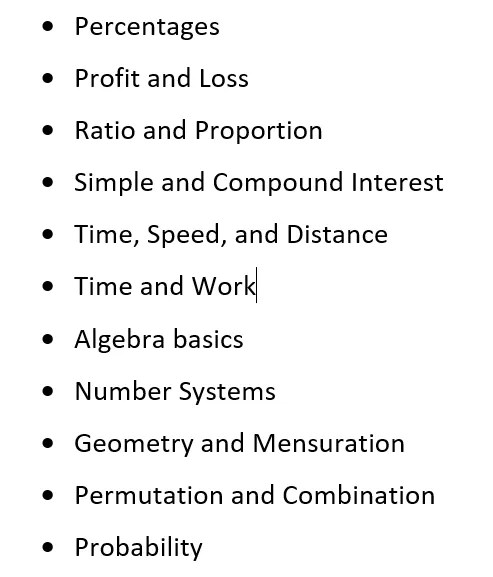
2. Logical Reasoning & Data Interpretation (LRDI)
This section checks how you think:
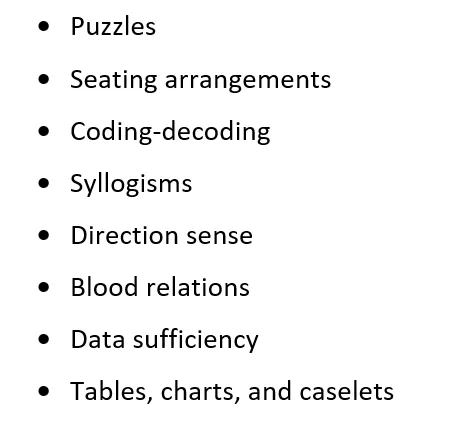
3. Verbal Ability (VARC)
This section checks your language skills:
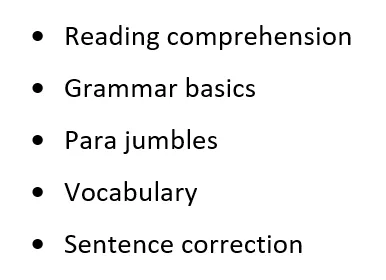
This is the full placement preparation aptitude syllabus followed by most companies.
2.4. How to prepare for aptitude tests
- Learn the basics: Use YouTube channels or books like RS Aggarwal or Arun Sharma. Keep a notebook for formulas.
- Practise daily: This is the most important part of aptitude test preparation for placement. Start with 10–15 questions per topic. Increase the count slowly.
- Give mock tests: Mock tests help you understand where you stand and how fast you solve questions.
- Solve previous year questions: PYQs show the real pattern of companies like TCS, Infosys, Cognizant, Capgemini, and Wipro.
- Good websites for practice: PrepInsta, IndiaBix, and Pocket Aptitude app.
If you follow this structure for 4 to 6 weeks, your aptitude score will improve fast and you will confidently clear the first filter in any placement drive.
Step 3: Technical preparation
Technical preparation is a big part of placement preparation because companies want students who understand their subjects well. This is true for both service-based and product-based companies.
3.1. Technical preparation for engineering students (CSE, ECE, IT)
Engineering students need a more structured plan. Here is what matters the most:
- Data Structures and Algorithms (DSA): Learn arrays, strings, linked lists, stacks, queues, trees, graphs, recursion and sorting. These topics appear in almost every coding round.
- DBMS, OS, and Computer Networks: Service-based companies ask easier MCQs. Product companies go deeper. These subjects matter a lot for ECE placement preparation too.
- OOP Concepts: Understand classes, objects, inheritance, abstraction and polymorphism. Be ready with real examples from your projects.
- Coding platforms to practice: Use Code 360 by Coding Ninjas for practice. Start with easy problems. Aim for at least 200 solved questions before placements.
3.2. Technical preparation for non-tech students
Non-tech roles do not need coding. They need clarity in basic tools and problem-solving.
- Learn domain basics (Finance, Marketing, HR, Operations)
- Learn MS Office, especially Excel and PowerPoint
- Practise reasoning and situational judgement questions
- Add skill-based certificates from Google, HubSpot, or LinkedIn Learning
These skills help during interviews and give you an edge over other students.
3.3. How technical tests work in big companies
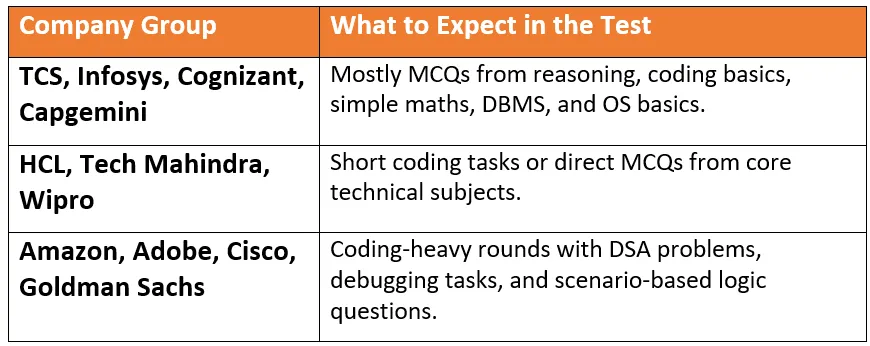
Step 4: Group discussions and communication skills
A group discussion (GD) is a round where a small group of students sit together and talk about a given topic for 10 to 20 minutes. Companies use GDs to see:
- How you speak
- How you behave in a group
- How you handle pressure
- How you present ideas
- How you solve problems with others
4.1. Types of GDs
Companies usually conduct three types of GDs:
- Current topics (AI in education, digital payments)
- Abstract topics (“Blue is Silent”, “Zero”)
- Business topics (startup growth, market trends)
4.2. How to speak effectively in group discussions
- Speak slowly and clearly
- Start with one strong point
- Add new ideas instead of repeating what others say
- Listen actively and respond politely
- Show leadership without dominating
- Support quieter members and giving short summaries
Step 5: Psychometric and Versant tests
Psychometric and Versant tests are becoming common in companies like Amazon, Deloitte, Accenture, and IBM.
5.1. What is a Psychometric test?
A psychometric test checks your personality, behavior, and work style. Companies use it to see how you think and how you fit into a team.
5.2. What is a Versant test?
A Versant test is a computer-based English communication test. Companies use it to check if you can speak clearly in real work situations, especially in client-facing roles.
5.3. How to prepare for these tests?
- Practise sample personality tests online to understand question patterns
- Read aloud daily to improve fluency
- Take simple English speaking and listening exercises
- Improve pronunciation using apps like Google Read Aloud
- Record your voice and listen to spot mistakes
- Watch short English news clips for clear speech patterns
- Stay consistent with 10–15 minute daily practice
- Take mock Versant test samples available online
Step 6: Interview preparation
Interviews are the final and most important stage of placement preparation. This is where the company decides whether you fit into the role. If you know the interview formats and follow a simple plan, it becomes much easier to perform well.
6.1. Types of interviews in campus placements
Students usually face 3 main interview rounds during campus placements. Each one checks a different skill.
| Interview Type | Duration | Faced By | What Happens |
|---|---|---|---|
| Technical Interview | 20–45 minutes | Engineering, IT, analytics, and product-role students | Project discussion, coding questions, core subject questions |
| HR Interview | 10–20 minutes | Students from all streams | Questions on strengths, goals, interest in the company, and behaviour checks |
| Managerial / Panel Interview | 20–30 minutes | Students appearing for Cognizant, Wipro, Deloitte, Capgemini and similar companies | Situational questions, teamwork stories, conflict handling, problem scenarios |
6.2. How many interviews will you face?
- Service-based companies: Usually 1–2 interviews.
- Product-based companies: Usually 2–3 interviews (more technical depth).
- Non-tech companies: Mostly 1 HR + 1 managerial round.
6.3. How to prepare for an interview
- Understand the job role clearly: Read the job description line by line. Note the skills and qualities they want. This helps you shape your answers.
- Learn about the company: Check their website, products, services, and basic company facts. A little research makes your answers sound confident.
- Practise your introduction: Create a short introduction (30–40 seconds). Talk about your education, skills, projects and what you are aiming for.
- Prepare your resume answers: Every point in your resume can become a question. Practise short explanations for your projects, internships and skills.
- Practise mock interviews: Record yourself and watch it. Fix your tone, speed, and clarity to get better in just a few days.
- Keep your documents ready: Resume, certificates, mark sheets, and project reports should be arranged neatly in one folder.
- Practise common interview questions and answers: Take a look at the common questions different companies ask when hiring students.
- Dress neatly: Simple formals and clean shoes build a strong first impression.
- Control your body language: Sit straight and smile lightly. Do not fidget. Keep eye contact steady and natural.
Also Read - Self Introduction for Experienced Candidates: Examples & Samples
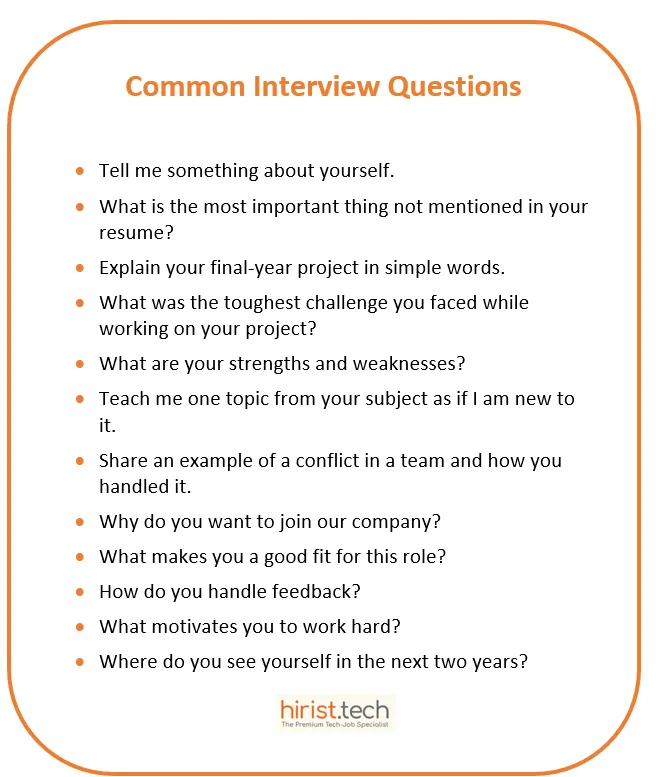
6.5. Common interview questions you should prepare
When to start placement preparation?
Most students start preparing late, and that becomes a big disadvantage during placement season. A simple timeline helps you plan better and avoid stress.
Here is a clear month-by-month plan that shows when to start and how much time to spend on each part of placement preparation.
Placement preparation timeline (month-by-month plan)
| Stage | When to Start | Ideal Duration | Weekly Time Needed |
|---|---|---|---|
| Resume + LinkedIn | 6–8 months before placements | 2 weeks | 3–4 hours |
| Aptitude Preparation | 6 months before placements | 6–8 weeks | 5–6 hours |
| Technical Preparation (Coding / Core Subjects) | 6 months before placements | 10–12 weeks | 6–8 hours |
| Communication + GD Practice | 3–4 months before placements | 3 weeks | 2–3 hours |
| Psychometric + Versant Tests | 2 months before placements | 2 weeks | 30 minutes daily |
| Interview Preparation | 2 months before placements | 4–6 weeks | 4–5 hours |
| Final Revision Phase | Last 2–3 weeks before placements | Ongoing | 1–2 hours |
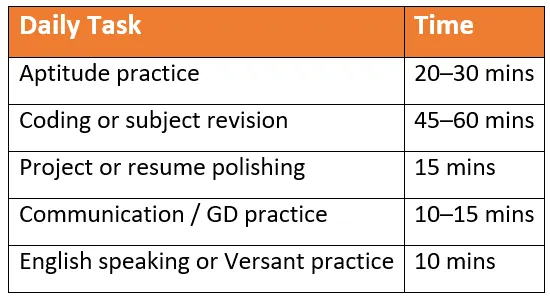
Quick breakdown you can follow daily
Company-wise placement preparation tips
Different companies follow different hiring patterns. So, here is a simple breakdown of the major companies that students target during placements. Follow these specific placement preparation tips to improve your chances.
A. Service-based companies
1. Infosys placement preparation
Infosys focuses on aptitude, basic programming, and communication. Here are some Infosys placement preparation tips:
- Practise arithmetic and logical puzzles
- Read comprehension daily
- Coding is simple, so revise loops, strings, and functions
- Be confident in HR rounds
2. TCS placement preparation
TCS filters most students through its long aptitude test. Follow these TCS placement preparation tips:
- Practise TCS NQT-style questions
- Coding level is beginner-friendly
- Revise arrays, patterns, and string logic
- Learn basic email writing and comprehension
- Focus on your project explanation in interviews
3. Wipro placement preparation
Wipro gives importance to communication, reasoning, and basic coding. Here are the important Wipro placement preparation tips:
- Practise verbal ability topics like sentence correction and synonyms
- Learn basic Python or Java logic questions asked in past Wipro tests
- Prepare simple HR answers related to strengths and teamwork
4. Cognizant placement preparation
Cognizant checks communication skills more than deep technical skills. Here are Cognizant placement preparation tips:
- Practise speaking clearly for the communication round
- Aptitude questions are moderate. Focus on puzzles and LR sets
- HR round may ask team-related and scenario questions
5. Capgemini placement preparation
Capgemini is known for its game-based aptitude round. Follow these Capgemini placement preparation tips:
- Practise attention-to-detail games, memory games, and pattern tasks
- Technical MCQs are basic. Revise DBMS, OS, and OOP concepts
- Managerial round checks behaviour
6. HCL placement preparation
HCL focuses more on behaviour, communication, and basic technical skills. Here are some HCL placement preparation tips:
- Aptitude level is easy to moderate, so practise arithmetic and puzzles
- Technical MCQs often come from DBMS, networks and basic coding logic.
- Be ready to explain your project in simple words
7. Tech Mahindra placement preparation
Tech Mahindra uses aptitude tests and communication rounds as major filters. You can use the following Tech Mahindra placement preparation tips:
- Practise grammar, reading comprehension, and sentence formation
- LR questions are common, so revise seating arrangement and data sufficiency
- Coding is basic. You may get small programs or debugging tasks
8. Accenture placement preparation
Accenture checks problem-solving and communication more than tough coding. Go through these helpful Accenture placement preparation tips:
- Practise mock aptitude tests focused on speed and accuracy
- Learn basic programming concepts even if you are from a non-tech branch
- Prepare situation-based answers like leadership, conflict handling or teamwork
9. Virtusa placement preparation
Virtusa focuses on coding ability and real-world problem-solving. Use these Virtusa placement preparation tips:
- Practise medium-level coding questions from arrays, strings, and recursion
- Learn SQL joins, OOP concepts, and simple system design basics
- Be ready for hands-on tests or debugging tasks
- Virtusa may prefer Java in coding tests
10. Hexaware placement preparation
Hexaware focuses on aptitude, communication and basic coding skills. Use these Hexaware placement preparation tips:
- Practise maths basics and logical puzzles
- Coding rounds may ask simple programs in C, Java or Python
- HR round checks your willingness to learn, so show interest and curiosity
11. Deloitte placement preparation
Deloitte focuses on aptitude, communication, and business awareness. Use these Deloitte placement preparation tips:
- Practise arithmetic, LR puzzles, and reading comprehension
- Learn basic Excel, PowerPoint and simple SQL – often asked in technical rounds
- Prepare behavioural answers around teamwork, deadlines, leadership and client handling
B. Product-based companies
12. Zoho placement preparation
Zoho focuses heavily on coding and problem-solving. Here are important Zoho placement preparation tips:
- Practise medium to hard coding questions daily
- Expect long tests with multiple rounds, including debugging and small projects
- Learn SQL basics and OOP concepts very well
- Be ready to write clean code on paper or a whiteboard
13. Oracle placement preparation
Oracle checks strong fundamentals more than advanced coding. Follow these Oracle placement preparation tips:
- Revise DBMS deeply – keys, joins, indexing and triggers are very common
- Practise OOP, OS, CN and basic coding questions
- Practise 1–2 medium coding problems daily from past patterns
14. Adobe placement preparation
Adobe focuses on efficient coding and clean problem-solving. Here are the helpful Adobe placement preparation tips:
- Practise DSA topics like recursion, trees, DP and bit manipulation
- Learn system design basics if you apply for developer roles
- Prepare maths-based logic questions asked in online rounds
15. Amazon placement preparation
Amazon follows a structured interview process with coding and behaviour rounds. Follow these Amazon placement preparation tips:
- Practise medium to advanced DSA questions from arrays, graphs and DP
- Learn Amazon Leadership Principles. You will get behavioural questions around them
- Practise writing code in a clean and readable way
- Be ready for multiple technical interviews in a single day
16. Cisco placement preparation
Cisco looks for strong networking and coding skills. You can use these Cisco placement preparation tips:
- Revise networking basics: OSI model, routing, IP addressing and protocols
- Practise coding questions at an easy to moderate level
- Learn DBMS, OS ,and CN concepts well
- Be ready for scenario-based questions like network troubleshooting or packet flow
17. Goldman Sachs placement preparation
Goldman Sachs has one of the toughest placement processes. So, follow these Goldman Sachs placement preparation tips:
- Practise medium to advanced coding questions daily
- Learn probability, statistics, and basic maths used in finance roles
- Do 1–2 mock coding tests each week (GS has long online tests).
- Prepare for case-based discussions and logical puzzles asked in interviews
Off-campus placement preparation for students
Campus placement preparation is important, but you can also find great opportunities through off-campus placements.
Many companies hire freshers directly from online job portals, and platforms like Hirist offer some of the best IT openings for students.
Off-campus hiring needs extra effort because you compete with a larger crowd, but it also gives you more freedom and more chances to apply throughout the year.
Quick tips for off-campus placement preparation:
- Apply daily on portals like Hirist and company career pages
- Keep 2–3 resume versions ready for different roles
- Stay active on LinkedIn with posts and networking
- Practise aptitude and coding every day for at least 45 minutes
- Join company-specific Telegram and WhatsApp groups for hiring updates
- Use mock interviews to improve confidence
- Track all applications in a simple sheet to follow up properly
Also Read - Weakness in Interview: Best Examples, Tips & Answers
Free resources for 2026 placement preparation
There are many free tools online that can make your placement preparation easier. We are also sharing some exclusive resources from Hirist.
| Category | Free Resources You Can Use |
|---|---|
| Aptitude website | IndiaBix |
| Coding platform | Code360 by Coding Ninja |
| Resume builder | Naukri Resume Maker |
| Resume format | Resume format for IT freshers |
| GD practice | Complete GD topics guide by Hirist |
| Interview questions | Interview questions and answers by Hirist |
| Interview advice | Top interview advice blogs by Hirist |
| Additional insights | Helpful insights for job seekers |
| IT job fair | IT job fair guide by Hirist |
| Career advice | Top career advice blogs by Hirist |
Conclusion
And that’s a wrap on our ultimate placement preparation guide for 2026. Placements are all about planning and regular practice. So, make sure you follow these three golden rules:
- Start early
- Stay consistent
- Keep building your skills day by day
When you feel ready to look for real openings, visit Hirist. It is one of India’s leading IT job portals where freshers can find genuine and high-quality tech jobs to start their careers.
FAQs
Most students should start in the second year with aptitude and communication skills. Start technical prep in third year and full placement prep in final year.
Yes, many companies have cut-offs like 6.0, 6.5, 7.0, or 7.5 CGPA.
But once you clear the cutoff, your skills matter more than marks.
Yes, with our free online resources and consistent practice, you can prepare on your own.
For most mass recruiters (TCS, Infosys, Wipro, Cognizant), aptitude is the main filter. For product companies (Zoho, Amazon, Adobe), coding + DSA matters more.
Practise the basics:
- Tell me about yourself
- Strengths and weaknesses
- Why this company?
- Career goals
- Situational questions
It is normal. Analyse mistakes, practise weak topics, and avoid losing confidence. Many students get placed after multiple attempts.
Communication, teamwork, leadership, problem-solving, decision-making, and time management are essential for both tech and non-tech roles.
Yes, especially Cognizant, Accenture, Tech Mahindra, and Deloitte. Keep your profile updated and professional.
Check each company’s:
- Test pattern
- Coding difficulty
- Interview style
- Previous papers
- Role expectations
Prepare accordingly based on these things.
- Resume
- ID proof
- College ID
- Certificates
- Project summary
- Passport-size photo
Always keep both digital and printed copies.