Avinash Kumar
Building software is not just about writing code that compiles; it’s about engineering resilient systems that stand the test of traffic, scale, and time. Authentic engineering starts with understanding the problem deeply before touching the keyboard.
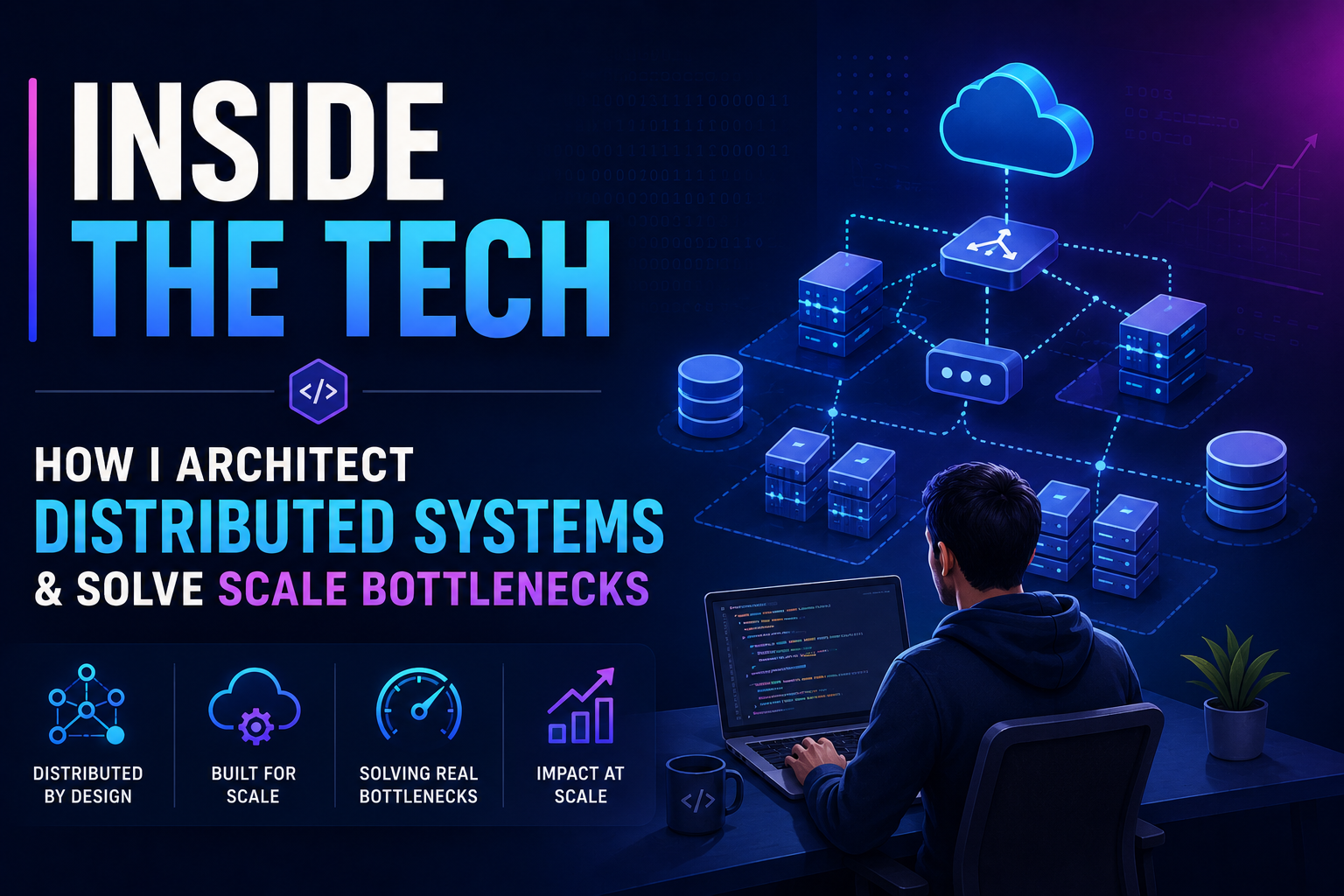
I started my journey in software engineering with a fascination for backend systems. Over the past 12 years, that fascination has grown into a rewarding career architecting scalable distributed microservices, designing reliable database schemas, and mentoring engineering teams. Today, as a Lead Technical Architect at TCS, my focus is on ensuring our cloud systems are performant, secure, and ready for high-concurrency workloads.
Throughout my career, I’ve had the opportunity to work across various domains, including FinTech, logistics, and enterprise SaaS. This diverse exposure has taught me that while technologies and stacks change, the core principles of solid system design—loose coupling, high cohesion, and thorough observability—remain constant.
My Technical Career Journey
Lead Technical Architect
Supervising the architecture of banking modernization projects, designing event-driven communication protocols, and spearheading cloud migration strategies across AWS and Azure.
Senior Systems Architect
Designed high-throughput message processing pipelines, optimized database performance under high read-write pressure, and led a 15-member core engineering team.
Senior Software Engineer
Developed secure transaction processing modules, integrated third-party payment gateways, and successfully reduced server costs by 30% via resource profiling and microservices containment.
Key Technical Achievements
Over the course of my career, I have driven several high-impact initiatives. My contributions focus primarily on making infrastructure cost-efficient, improving database performance, and establishing coding guidelines for engineering teams. Here are the major achievements I have led:
- Cloud Infrastructure Cost Optimization: Architected a dynamic container scaling policy that reduced monthly cloud infrastructure spend by 35% while maintaining 99.99% availability during high-traffic client marketing events.
- API Latency Reduction: Profiling application bottlenecks and refactoring legacy APIs to utilize asynchronous worker threads and optimized indexing structures. This resulted in SQL query execution speed improvements of roughly 60%.
- Engineering Standards & Mentorship: Drafted internal microservice blueprints and code styling guides used across team divisions. Directly mentored 25+ junior developers, smoothing their onboarding into advanced systems design workflows.
Solving the Scale: A Case Study
In our enterprise system, we hit a critical wall with notification delivery delays. As user volume grew, notification delivery delays rose up to 45 seconds during traffic peaks. This created a bad checkout experience and blocked core user flows.
The Core Challenge
The primary issue was synchronous coupling. The monolithic core web application was processing payment checkouts and sending SMS/email updates in a single, blocking threads loop. If third-party SMS/email APIs experienced any slowness or downtime, our checkout thread pool would quickly exhaust itself, resulting in cascading timeouts and gateway crashes across the entire payment checkout tunnel.
The Architectural Solution
To address this bottleneck, I designed and implemented an asynchronous messaging structure. We decoupled the core application from notification tasks by introducing a message broker (RabbitMQ/Apache Kafka). Under this architecture:
- When a checkout completes, the core web app publishes a simple “NotificationTrigger” event to the queue and instantly returns a success response to the user in less than 10 milliseconds.
- A dedicated pool of background consumer workers processes the queue messages asynchronously, pulling template layouts from a Redis caching layer to assemble and dispatch notifications without touching database locks.
- We implemented circuit breaker patterns (using Resilience4j) to automatically route requests to fallback notification vendors if a primary vendor went offline.
The Result
Once deployed, this decoupling strategy successfully decreased checkout API latency by 75% under heavy stress, safely scaling to process over 10 million transactions daily with a system uptime of 99.9%.
Tech Stack & Future Learning Path
Technology moves incredibly fast. To remain effective, I continually audit my technical skills and actively set aside structured learning goals for emerging tools.
Core Technical Stack
In my daily architect role, my primary toolbox consists of Node.js, Java (Spring Boot framework), AWS Cloud infrastructure services, containerization tools (Docker & Kubernetes), PostgreSQL relational databases, and Redis caches.
Future Pursuits & Learning Goals
To stay aligned with modern shifts in backend engineering, I am currently exploring and studying systems programming using Rust, building integration pipelines with LangChain and Large Language Model (LLM) APIs, and studying gRPC communication protocols to replace REST interfaces in high-throughput internal microservices.
Developer Toolkit Preferences
For development, my setup consists of VS Code (Dracula theme), macOS/Linux shells, and Zsh terminals. And of course, a healthy supply of double-shot espressos to fuel late-night system design mockups.
Quick-Fire Q&A
Get a quick look into my career mindset, engineering habits, and key tips for developer growth.
Always write code that is optimized for readability first and performance second. Code is read ten times more than it is written. Clean abstraction structures make troubleshooting production issues much faster.
Refactoring should be metrics-driven. I look for signs such as developer velocity drops in a module, elevated CPU/Memory footprints under baseline loads, or frequent bug reports in a specific area. If it isn’t causing measurable bottlenecks or slows down shipping times, prioritize shipping features instead.
Master one primary object-oriented language (like Java or C++), understand the core operations of relational databases (joins, indexes, transactions), and get comfortable explaining your college project. For the Digital stream specifically, having some knowledge of microservices, cloud deployments, and basic caching is highly advantageous.
Shared by Avinash Kumar as part of the Hirist community outreach. Designed to inspire developers and celebrate authentic technical contributions across organizations.