
Weakness in interview – Key takeaways
- What do “weaknesses” actually mean in an interview? A weakness is a small skill gap or habit you are still working on. It is not a failure, just an area where you want to improve.
- Should I really talk about my weakness in interview? You should only talk about your weakness in an interview if the recruiter asks the question. Do not bring it up on your own.
- Formula to answer “What are your weaknesses?” in interview: Weakness + Example + Action + Progress. State the weakness and give a short example. After that, explain the action you are taking to improve and end by showing the progress you have already made.
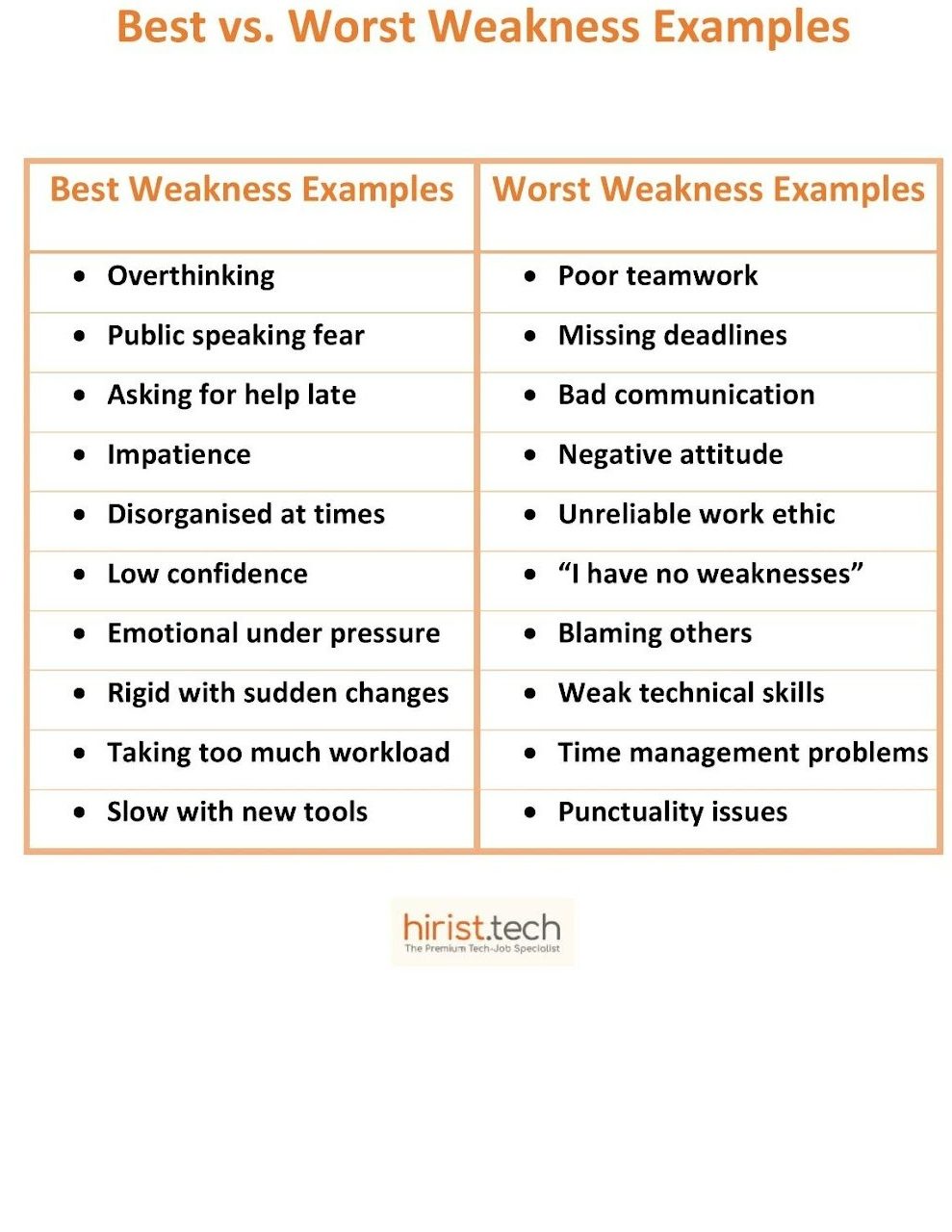
- Examples of weaknesses you can use: Common examples of weaknesses include – Overthinking, shyness, public speaking, time management, getting nervous in meetings, impatience, insecurity, etc.
- How can freshers talk about their weakness in interview? Freshers should use weaknesses from college or internships and show how practice or small routines are helping them improve with every new task.
- How experienced professionals should shape their weakness answer? Pick a minor weakness that does not affect your main job, explain how it once slowed you down, and share the steps you now follow to fix it.
- What to avoid when talking about your weaknesses in an interview? Do not claim you have no weaknesses and do not hide strengths as weaknesses. Also, make sure you do not blame others for habits you need to improve.
- How long should your answer be? Keep your answer short. Around 20 to 30 seconds is enough.
“What are your weaknesses?” is one of the most common interview questions you will face at any experience level. It is a self-assessment type of question that recruiters ask to check your honesty and attitude toward growth. You may hear it in many different forms, such as:
- What are your strengths and weaknesses?
- What is your biggest weakness?
- What are some areas you are trying to improve?
Talking about weakness in an interview makes many people fumble because the question is tricky. You obviously want the job and do not want to say anything negative. But this question actually gives you a chance to show that you have a growth mindset. And the right answer can easily impress the interviewer.
In this blog, we will show you the simple tricks to talk about your weaknesses in a job interview. You will also get the best sample answers for both freshers and experienced professionals.
Best sample answers for “What are your weaknesses?” interview question
We are sharing the two best sample answers to help you talk about your weakness in interview. This is how you should frame your answer.
Sample 1: Weakness in interview for freshers
One weakness I am working on is speaking up in group settings. During college projects, I stayed quiet even when I had good ideas because I felt nervous about saying the wrong thing. I realised this was stopping me from contributing fully. So I started giving myself a small rule. I speak at least once in every group task even if it is a simple point. I also practice by joining small study groups and taking part in classroom discussions. It feels a little easier now. I am still building confidence but I can see steady progress with every new activity.
Why does this answer work for freshers?
- This answer works because it is simple and believable.
- Freshers do not have long work experience so using college examples makes sense.
- Speaking up in groups is a common and safe weakness.
- The answer shows action instead of excuses.
- It proves you are actively improving your habits.
Sample 2: Weakness in interview for experienced professionals
I have a habit of overthinking tasks when the project is important. I sometimes spend extra time double-checking small details, and this slows me down during tight deadlines. I noticed this clearly in my last role when I reviewed work multiple times, even though the first version was already accurate. To fix this, I created a simple routine. I use a checklist for repeat tasks and set time blocks for deep work. This helps me stay focused and finish on time without losing quality. I can see steady improvement in the way I manage my workload now.
Why does this answer work for experienced professionals?
- It sounds relatable.
- The weakness is safe and does not harm the core job role.
- The improvement steps are practical and believable.
- It shows discipline and self-awareness – qualities that matter a lot when hiring someone with experience.
Note: There are more examples of weaknesses later in the blog. First, we want to show you the right way to answer this question so you can use those examples properly.
Why interviewers ask about your weakness
Answering about your weakness in interview becomes much easier when you look at it from the recruiter’s point of view. They are not trying to trap you. They only want to know about the weakness of a person in an interview to see whether they are the right fit for the job position. Once you understand their real reason behind asking about your weakness in an interview, you can shape a strong answer.
Now let’s take a look at what they actually want to see from your answer:
- Check your self-awareness: Recruiters want to see if you understand your own habits and limits. A person who knows their list of personal weaknesses usually learns faster at work.
- See if you are honest: Interviewers know everyone has flaws. They are checking if the weakness of person in interview is real or if you are lying and trying to sound perfect.
- Understand how you handle challenges: Everyone struggles with something. They want to know if your weakness for a person affects your work or if you manage it well.
- Check your willingness to grow: Companies prefer people who improve themselves over time. A weakness in interview becomes safe when you show you are already working on it. This tells them you are responsible and ready to grow.
- Judge your work style: A good employee takes feedback in a calm way. Your answer helps them see how you react when someone points out a problem.
- See your role fit: Interviewers want to be sure your weakness will not affect the job. A small weakness for a person is fine as long as it does not harm your main tasks.
How to answer “What are your weaknesses?”
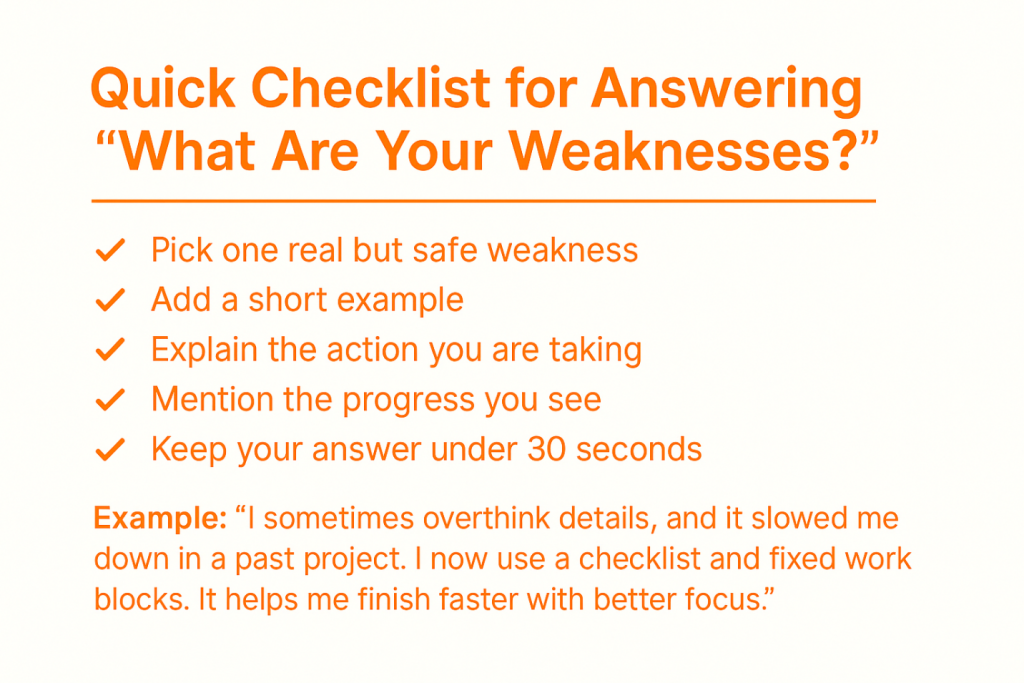
Now that you know why recruiters ask about your weakness in interviews, let’s learn how to prepare your answer. Here is a simple 6-step method to give the best answer to “What is your weakness?” in any job interview.
- Understand the company and the role
The first step is research. Take time to study the job description and collect information about the company. Understanding the company’s expectations helps you avoid choosing a weakness in interview that hurts your chances.
For example, you should not mention communication as your weakness in an interview if the role needs strong communication skills. Instead, you can go with something safe but still honest.
This is the mindset behind all good answers to what are your weaknesses.
- Reflect on yourself and make a small list
This is the most important step in understanding your own weakness. Sit down and think honestly about habits or tasks you struggle with. Make a small list of real weaknesses that affect your work or studies.
Ask yourself these questions to know your own weaknesses:
- What problems do I regularly face at work?
- What do I avoid because it feels difficult?
- What feedback have I received from teachers or managers?
- Where do I make small mistakes again and again?
This list gives you honest options to choose from. Your goal is to identify a real weakness of person in an interview situation – something that feels human and believable.
- Choose one weakness that is real but safe
Now, you must choose a weakness from the list that does not affect the main responsibilities of the role. This is the trick behind the best answer for weakness.
A safe weakness in interview is something you can improve with practice. A risky weakness would be something that directly stops you from doing the job well.
Examples of safe weaknesses in an interview:
- I take time to adjust to new tools.
- I get nervous when speaking in front of a group.
- I overthink small details during big projects.
- I hesitate to ask for help even when needed.
Examples of risky weaknesses in an interview:
- I struggle to finish tasks on time.
- I cannot work in teams.
- I do not like feedback.
- I forget important steps.
Choosing the right weakness is half of the best answer to “What is your weakness?”
- Connect it to the job with a simple story or example
Interviewers trust you more when your weakness in interview is linked to a real situation. You do not need a long story. One short example is enough.
Example:
“I struggled with speaking up during team meetings. I had ideas but stayed quiet because I felt nervous. It slowed down my involvement in the team.”
A real example makes your weakness in an interview sound natural and not forced.
- Turn your weakness into a growth story
This is the part where you turn your weakness into a strength by showing how you are working to improve it. Recruiters do not care about the weakness in interview. They care about the action you are taking.
So, make sure you end your answer by showing the simple steps you are taking to deal with your weakness.
Examples:
- I now speak once in every meeting to build confidence.
- I use a checklist and time blocks to avoid overchecking details.
- I watch small tutorials to get faster with new tools.
A growth mindset is what makes your answer one of the good answers to “What are your weaknesses?” It shows you are someone who learns fast and grows fast.
- Keep your final answer short and real
Your full answer should take only 20 to 30 seconds. Short answers about weakness in interview sound honest and confident. Long answers sound nervous.
When you follow this structure, you naturally create the best answer to what is your weakness without sounding rehearsed or robotic.
Also Read - How to Introduce Yourself in an Interview Professionally?
Formula to talk about your weaknesses in an interview
We have created a simple formula to help you talk about the interview question “What is your weakness?”. It works for every interview. Here is the formula you can follow every single time:
- Name the weakness: Pick one weakness from your list of personal weaknesses that feels real but safe for the job. Mention it clearly at the beginning of your answer.
Example:
“I take time to adjust when a new tool or software is introduced.”
- Use an example: Give a small example that shows this weakness to make your answer natural and believable.
Example:
“In my last project, our team moved to a new reporting tool and I needed extra time to understand the features.”
- Mention the action steps: This is the most important part. Your weakness in interview becomes safe when you talk about the steps you follow to improve it. It shows responsibility and maturity.
Example:
“I now watch short tutorials whenever a new tool is introduced and I practise it during free time so I feel comfortable faster.”
- End with the progress: Finish your answer by showing what has improved so far. It turns your weakness into a growth story instead of a problem.
Example:
“I can see good progress now. I learn new tools more quickly and need less support than before.”
The full formula:
Weakness → Short example → Action step → Progress
You can use this formula for all examples of a person’s weaknesses.
It works no matter which weakness you choose from your list of weaknesses of a person.
Template based on the formula:
I struggle with ____
I noticed this during ____
To improve, I started ____
It is helping me because ____
Weakness example created using the template:
Here is a sample of weakness answer we have written using the set template: I struggle with adjusting to new tools quickly. I noticed this during a project where our team moved to a new reporting system and I took extra time to understand it. To improve, I started watching small tutorials and practising the tool for a few minutes each day. It is helping me because I now learn new software faster and feel more confident during transitions.
Also Read - How to Answer 3 Strength and Weakness in Interview (Best Tips with Answers)
List of weaknesses for interview (With example answers)
Choosing the right weakness in interview is easier when you see clear weaknesses examples written in a simple format. Below are the examples of weaknesses for interview, along with a short sample answer for each.
- Overthinking
Overthinking happens when you spend too much time checking small details. It can slow you down and create doubt in your work, even if it is good. Overthinking is a common problem among freshers.
Sample answer for this weakness in interview:
I tend to overthink small details, especially when a task feels important, and this makes me check things more times than needed, which slows me down. I noticed this during a project where I spent extra time reviewing work that was already accurate and it pushed my timeline further. To fix this, I now use a simple checklist and I set time blocks for focused work so I do not drift too much. This keeps me steady and I can see real improvement in the way I finish tasks now.
- Public speaking
Public speaking can be challenging when you feel nervous in front of groups. It affects confidence during presentations but improves quickly with regular practice. Here is the best answer to “What is your weakness?” interview question if you face problems like public speaking.
Sample answer for this weakness in interview:
Public speaking makes me nervous and this becomes clear when I speak in front of a large group because my pace increases and my points become shorter than planned. A team meeting made me realise that my ideas were good but my delivery needed more control. Now I practise small presentations with friends and record myself so I can understand how I sound. I also prepare simple cue points before meetings and this helps me speak with steadiness and clarity.
- Asking for Help
Some people hesitate to ask for help because they want to solve everything alone. This creates delays but becomes easier when you learn to ask early.
Sample answer for this weakness in interview:
I hesitate to ask for help because I feel I should solve problems on my own. This sometimes slows me down during complex tasks. I noticed this when I spent extra time trying to fix a tool issue instead of checking with a teammate. Now, I ask early when I am stuck for more than a few minutes. It saves time and improves the quality of my work. I am getting more comfortable reaching out when needed.
- Competitive
Being competitive can push you to do well but it can also create pressure and make you compare yourself too much instead of focusing on steady progress.
Sample answer for this weakness in interview:
Competition brings out my drive but it sometimes leads me to compare my progress with others instead of focusing on my own pace. This can make me rush through tasks and create pressure that does not help my work. I realised this during a team assignment where I pushed myself too hard and lost my natural rhythm. To improve, I set clear personal goals and track growth based on my own work. It keeps me steady and gives me better results.
- Impatience
Impatience shows up when you want results quickly and get restless during slow tasks. It affects focus but becomes manageable with simple planning and clear expectations.
Sample answer for this weakness in interview:
I struggle with impatience when a task moves slower than I expect and it makes me feel like nothing is shifting. This became very clear during a long assignment where progress was steady but slow and I found my focus dropping. I now plan my day in short work blocks and add small checkpoints so I can see steady movement. This approach keeps me calm and helps me stay in control without feeling rushed.
- Disorganised
Being disorganised usually shows up through scattered notes or an untidy workspace. It does not affect work quality but it slows things down during busy days. This is a common weakness in interview for freshers.
Sample answer for this weakness in interview:
One thing I want to work on is my organisational skills. When the workload gets heavy, I focus so much on finishing tasks that I leave very little time to keep things in order. This started slowing me down during simple tasks and it did not feel professional. So I now take a few minutes each day to sort my desk and keep my digital notes in one clean folder. It is a small habit but it already makes my day feel clearer.
- Self-criticism
Self-criticism makes you focus on flaws more than progress. It lowers confidence and turns simple mistakes into something bigger in your mind. This can work as a positive weakness in interview.
Sample answer for this weakness in interview:
I tend to be hard on myself even when the final work is good. I saw this after a recent project where everything went well but I kept thinking about tiny things I could have done differently. So I started writing down small wins at the end of my day. It helps me see what I actually achieved instead of what I missed. This shift makes my work feel lighter and keeps me more balanced.
- Rigid
Being rigid means you prefer fixed methods and feel uneasy with sudden changes. It slows you down when plans shift or teams work in flexible ways. You can use this sample weakness for interview.
Sample answer for this weakness in interview:
One thing I am working on is being less rigid with my approach. I like clear plans and when things change suddenly, it takes me time to adjust. This happened during a project where priorities shifted and I felt a bit stuck. Now I keep a simple outline for backup plans and give myself a few minutes to reset before moving ahead. It helps me stay more flexible and handle changes without losing momentum.
- Emotional
This can be a good example of a weakness in an interview. Being emotional means you react strongly to situations and feel things deeply. It can affect decision-making when pressure rises, but it improves with awareness and calm habits.
Sample answer for this weakness in interview:
I feel things deeply and that sometimes comes out during stressful moments at work. A small issue can feel bigger than it is when pressure rises. I have started pausing before responding and it gives me a clearer view of the situation. This small pause helps me control my reactions and speak in a way that supports the discussion instead of adding more tension.
- Low confidence
Low confidence makes you doubt your ideas even when they are correct. It holds you back in discussions and makes it harder to speak up early. You can use this best answer on “What is your weakness?” for describing your low confidence issue.
Sample answer for this weakness in interview:
I sometimes hold back my ideas because I question myself more than I need to. This became obvious during a meeting where someone later shared the same point I had in mind. Now I prepare two simple thoughts before every discussion and aim to speak early. This helps me build confidence slowly and makes it easier to join conversations without overthinking.
Common weakness to mention in an interview
Understanding different weakness categories helps you pick a safe and honest answer for interviews. Here are some good weaknesses for interview:
| Category | Best weaknesses for interview |
| Skill-based weaknesses | Limited Excel skillsBasic presentation skillsSlow typing speedWeak analytical skillsDifficulty with complex software |
| Behavioural weaknesses | OverthinkingImpatienceEmotional reactionsLow confidenceToo competitiveStruggling with sudden changes |
| Soft skill weaknesses | Public speakingDifficulty expressing ideasListening issuesHesitation to take initiativeTrouble giving feedback |
| Work-habit weaknesses | DisorganisedOverchecking workPoor prioritisingMultitasking issuesDistractions |
| Weaknesses to avoid in interview | Poor teamworkNegative attitudeBad communicationUnreliable work ethicMissing deadlines oftenWeak technical skills Lack of interest in learningDifficulty working with managersPoor time disciplineProblems with punctuality |
Also Read - Behavioural Interview Questions: Examples, Answers & STAR Tips
Best weakness answers for interview (with examples)
Many candidates struggle to find good answers to “What are your weaknesses?”, so these examples help you speak clearly and show real growth in interviews. We have divided the answers for freshers and experienced professionals.
“What are your weaknesses?” Sample answers for freshers
Here are a few sample answers that help freshers talk about weakness in a clear and honest way without harming their chances in the interview.
Example 1: What is your greatest weakness?
Recruiters often pose the weakness question this way for freshers. Here is the best sample answer to “What is your greatest weakness?” in interview.
“Shyness is one of my greatest weaknesses and I am working on it. I take a little time to open up in new groups and it holds me back during the first few days. This happened often in college projects where I took longer to speak. I now prepare small points before discussions and try to talk early instead of waiting too long. It helps me settle faster and I feel more comfortable sharing my ideas.”
Example 2: Self-introduction
The introduction for interview for freshers is very important because it creates your first impression. However, many newly graduates have weakness in self-introduction. So, you can address it directly by telling the recruiter that self-introduction is one of your weaknesses. But make sure you show growth and improvement.
Here is the best sample answer for this weakness in interview:
“I am still improving my self-introduction skills. As a fresher, I sometimes get stuck trying to explain my background in a clear and simple way. It happened in a few mock interviews where I felt my introduction sounded rushed. So I practised a short and steady version that covers my studies and goals. It is getting better now and I feel more confident starting the conversation.”
Also Read - Self Introduction for Experienced Candidates: Examples & Samples
Weakness examples for experienced candidates
Here are common weakness asked in interview for experienced candidates.
Example 4: What are your 3 biggest weaknesses?
Interviewers often ask this weakness question to experienced professionals. Here, you have to describe three weaknesses instead of one. So, here are some good 3 weaknesses job interview examples.
“Three weaknesses I am working on are impatience, overthinking, and taking too much responsibility. I get impatient when tasks move slowly without updates, so I set small checkpoints to stay calm. Overthinking sometimes delays my decisions, so I follow a simple rule of deciding within a fixed time. I also take on more work than needed, so I check my capacity before saying yes. These habits help me work in a steady and balanced way.”
Example 5: Multitasking issues
“I struggle with multitasking during heavy workloads because switching between tasks breaks my focus. I noticed this when I handled two client requests at the same time and made small errors. Now I work in focused blocks and finish one task before moving to the next whenever possible. It keeps my quality stable and my mind calmer.”
Things to avoid when talking about your weakness in interview
Here are common mistakes that can make your weakness answer sound risky, so make sure you avoid these things:
- Choosing a weakness that is required for the role
- Giving joke answers like “I care too much”
- Sharing personal issues instead of professional weaknesses
- Listing many weaknesses at once
- Blaming coworkers or managers
- Speaking in a negative or defensive tone
- Mentioning a weakness you have never worked on
- Talking for too long without a clear point
- Saying you have no weaknesses
- Using harsh words to describe yourself
Final tips to talk about your weaknesses in an interview
Here are a few simple tricks that make your weakness answer sound honest and professional without reducing your chances in the interview.
- Pick a weakness that will not harm the role
- Always show the action you are taking to improve
- Keep your example short and real
- Focus on progress, not the problem
- Speak in a calm and confident tone
- Avoid extremes and overly dramatic weaknesses
- Practise your answer out loud
- Prepare a clean 30–40 second answer
Wrapping Up
So, that’s how you tackle the “What is your weakness?” interview question in the right way. Talking about weakness in an interview can easily work in your favour if you follow the right technique.
Choose from the list of weaknesses we have mentioned in this blog and follow the steps we have shared to prepare your own answer. You can also use our sample answers and formula template to make the process easier for you.
And if you are preparing for your next career move, visit Hirist to find the best jobs in the IT sector.
FAQs
A good weakness answer is honest and fixable. Pick one weakness, add a real example, and show the steps you are taking to improve.
Five strengths can be – teamwork, problem-solving, communication, adaptability and creativity.
Five weaknesses in an interview can be – overthinking, shyness, impatience, low confidence and public speaking fear.
Pick a weakness in interview that does not affect the main job duties. Choose something real but manageable and something you are already improving.
Use a simple structure to discuss your weakness in interview: weakness + short example + action + progress. Keep the answer short and talk in a calm way.
Three safe weaknesses in an interview are: overthinking, impatience, and public speaking. These are common and easy to explain with simple improvement steps.
Choose a weakness in interview that is safe for the role and show improvement. Also, keep the tone positive. Always end with the progress you are seeing.
It is best to avoid weakness in your CV because it is a marketing document. You also shouldn’t add any resume weakness. Save weaknesses for the interview where you can explain them properly with context and improvement.