
Key highlights for Behavioural Interview Questions:
- Behavioural interview questions: These questions ask about real situations you handled in the past. They help interviewers understand how you think and solve problems at work.
- How many behavioural questions are asked in interviews? Most interviews include five to ten behavioural based questions, depending on the role and experience.
- How long should your answer be? Keep each answer short and clear. Around 60 to 90 seconds is enough to explain.
- What is the STAR method? STAR helps you structure answers: Situation, Task, Action and Result. It keeps your story focused and easy for the interviewer to follow.
- How to answer behavioural interview questions? Pick a real example, explain your role, share the steps you took and end with a simple result that shows your impact in that moment.
- How to prepare for behavioural job interview questions? Create a small story bank of past situations. Practice speaking them out loud using the STAR steps so your answers stay clear and confident.
- In which interview round are behavioural questions asked? They usually appear in the first or second round because they reveal your working style early.
Behavioural interview questions are now a core part of most hiring processes because they give a strong clue about how you will behave in a new team. You can expect at least 5 to 10 common behavioural questions in an interview like:
- Tell me about a time you handled a tough situation at work.
- Give an example of a mistake you made and what you learned.
These questions can directly impact your chances of getting selected. So you cannot walk in with vague answers. You need clear stories from real moments in your work life.
In this guide we will break down what these questions really test and how you can use simple steps like the STAR method to give honest and strong answers. You will also find 30+ common behavioural interview questions with sample answers to prepare better.
What are behavioural interview questions?
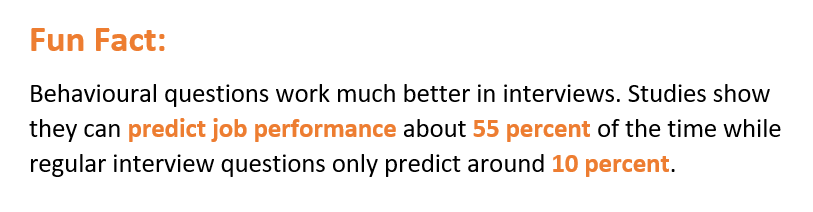
Behavioural-based interview questions ask you to share real situations from your past work life so the interviewer can understand how you solve problems and work with others. These questions look closely at your actions and decisions because they give a reliable clue about how you will perform in future roles.

This style became popular in the 1970s when industrial psychologists introduced “behavioural interviewing” to replace vague and opinion-based questions. Today, most companies use behavioural questions in interview it to judge job fit with more accuracy.
Why do interviewers ask behavioural questions?
Interviewers use behavioural questions to understand the person behind the resume. Real examples reveal your working style better than generic answers or theory. They ask behavioural questions in interview to check:
- Your approach to solving everyday challenges
- Your ability to stay calm during pressure
- Your style of dealing with people and conflict
- Your clarity while explaining actions and decisions
- Your level of responsibility when things go wrong
- Your mindset and values
- Your fit for the team
How do you prepare for behavioural interview questions?
A good way to prepare is to start with the questions themselves. When you know what interviewers usually ask, it becomes easier to pick the right stories from your experience.
Step 1: Start by reviewing the most common behavioural questions
Before preparing your answers, it helps to understand the pattern behind these questions. So begin by reading through common behavioural-based interview questions and note the themes they fall into. Most behavioural interview topics revolve around six areas:
- A time you solved a problem
- A time you handled pressure
- A conflict with a colleague
- A goal you achieved
- A mistake you learned from
- A moment you showed leadership
This step helps you understand what interviewers usually look for and stops you from guessing on the interview day.
Step 2: Think about real situations from your past roles
Once you know the behavioural interview topics, think about moments from your work life or internships or projects that show how you handled something meaningful. These moments do not need to be dramatic. A small win or a tricky interaction can work well. This step matters because behavioural questions are always linked to your actions.
Step 3: Choose 5 to 6 strong examples to build your “story bank”
Pick a few situations that you can talk about easily. You do not need twenty stories. Just five or six solid ones are enough to answer almost any behavioural question. This works because one story can often answer many questions with a small twist.
Step 4: Shape each story using the STAR steps
Now take each example and break it into four simple parts:
- Situation: What was happening?
- Task: What were you responsible for?
- Action: What steps did you take?
- Result: What changed because of you?
STAR matters because it keeps your answer organised and stops you from rambling.
Step 5: Practise out loud
Say your stories in a natural way and do not memorise full sentences.
Speak in short points and make sure you adjust your body language. It keeps your answers real instead of stiff or robotic. This step helps you stay calm during the actual interview because your mind has already rehearsed the structure.
Step 6: Time your answers to 60 to 90 seconds
Most good behavioural answers fit in under a minute and a half.
If your story is short, it feels unclear and if it is too long, the interviewer loses interest. So, keep your answers short and to the point without extra details.
How to answer behavioural-based interview questions using the STAR method?
Behavioural questions are easier to answer when you follow a simple structure. The STAR method helps you give focused answers that interviewers understand quickly.
What is the STAR method?
The STAR method is a practical way to structure your answers in behavioural interviews. It helps you explain your story in a clear order so the interviewer understands the situation, your role and the impact you created.
STAR stands for:
- Situation: Give a quick background of what was happening.
- Task: Explain what you were responsible for in that moment.
- Action: Describe the steps you took to handle the situation.
- Result: Share the outcome and what improved because of your actions.
Tips to answer behavioural job interview questions well using the STAR method
The STAR method works only when you use it correctly. These tips help you turn your story into a clear and impressive answer that interviewers can easily follow.
- Start with the result to get attention: A quick one-line result at the beginning (“We recovered the client account”) sets context and makes the interviewer curious to hear the story.
- Keep each part of STAR balanced: Many candidates spend too long on the Situation. Keep it short. Most of your answer should stay in the Action and Result because that is where your contribution becomes visible.
- Use numbers or simple measures in the result: Even small metrics make your answer stronger. You can mention time saved, errors reduced, people helped or tasks completed faster.
- Mention the challenge or pressure honestly: Do not hide the difficulty. Interviewers want to know how you behave when things are not smooth. A small challenge makes your action look meaningful.
- Add one reflection at the end: A short line like “This taught me to communicate earlier” shows maturity. It also tells the interviewer you learn from experiences.
- Keep your tone calm and steady: Behavioural questions test emotional control. Speaking slowly and clearly shows you stay composed even when describing stressful situations.
30+ common behavioural interview questions with sample answers
Here are some commonly asked behavioural-based interview questions and answers for freshers and experienced professionals. You can use them to practice your answers.
Behavioural interview questions for freshers
Let’s go through some behavioural interview questions for freshers along with simple sample answers to help you understand how to frame your responses.
- Tell me about a time you worked in a team during college or an internship.
This question checks how well you collaborate and adjust to group responsibilities.
Sample answer:
In my final-year project, our team struggled with overlapping tasks. I suggested dividing work based on strengths and set up a shared tracker. This cleared confusion, helped us stay organised, and we completed the project ahead of the deadline.
- Share a moment when you solved a problem on your own.
Interviewers ask this to check your ability to take ownership instead of waiting for instructions.
Sample answer:
A dashboard was showing incorrect numbers just before a meeting during my internship. I reviewed the formulas, found a missing reference and fixed it. The manager appreciated that I acted quickly and avoided a delay in the presentation.
- Describe a situation where you handled pressure during a project or exam.
The answer should show your ability to stay calm, plan well, and work under deadlines.
Sample answer:
During placement season, I had two exams and a presentation in the same week. I broke my tasks into small parts and studied in short focused blocks. This helped me stay steady, and I performed well in all three assessments.
- Give an example of feedback you received and how you acted on it.
This question checks our willingness to learn, improve, and accept constructive feedback.
Sample answer:
My internship mentor said my reports were too detailed and hard to skim. I started using short headings, summary points and cleaner formatting. My reports became easier to read, and the mentor mentioned the improvement in our next review.
- Talk about a time you took initiative without being asked.
The answer should show your drive to add value even when no one assigns a task.
Sample answer:
At a college event, the registration desk got stuck because entries were being written manually. I created a quick Google Form and helped shift registrations online. The queue moved faster, and the team used the same format for future events.
Behavioural interview questions for experienced professionals
Here are the common behavioural questions and answers for experienced professionals.
- Describe a time you managed a conflict within your team.
This question checks your ability to handle people issues calmly and guide teams toward a solution.
Sample answer:
Two developers disagreed on the design approach, which delayed the module by one day. I brought them together, mapped both options against requirements, and we agreed on a blended solution. The issue was closed in 15 minutes, and the sprint moved back on track.
- Share an example of a major decision you took and how it impacted the project.
The answer should reflect your decision-making skills and how you balance risks with project goals.
Sample answer:
A secondary feature required three extra days and risked the release. I removed it from the sprint and informed stakeholders with a revised timeline. The product went live as planned, and we added the feature in the next cycle.
- Talk about a challenging stakeholder or client situation you handled well.
The answer should show your communication skills and ability to manage expectations professionally.
Sample answer:
A client was frustrated due to shifting timelines. I explained the blockers clearly, reset expectations, and started sharing weekly progress summaries. After four weeks, the client’s concerns reduced and discussions became smoother.
- Tell me about a mistake you made at work and how you fixed it.
The question checks your accountability, emotional maturity, and problem-solving under pressure.
Sample answer:
I once missed a dependency while estimating a sprint. When the issue appeared, I informed the team, re-estimated with the correct details, and adjusted priorities. We still delivered most items and avoided repeating the mistake by adding a checklist to our planning process.
- Give an example of mentoring, guiding, or leading others on your team.
The answer should reflect your leadership style and how you support the growth of others.
Sample answer:
One junior developer struggled with code reviews. Instead of fixing the code myself, I walked him through the logic and showed a few reusable patterns. Within two months, his review time improved and he started helping new interns.
Company-specific behavioural interview questions
These are additional company-specific behavioural questions you may also hear in a job interview.
Amazon behavioural interview questions
- Can you think about a time when you took on a task that was not under your job responsibilities?
- Tell me about your strengths and weaknesses.
- Share an example where you made a quick decision because waiting for more data was not an option.
- Tell me about a time you got negative feedback. How did you react with?
- Tell me about someone whose trust you had to earn and how you did it.
Google behavioural interview questions
- Describe a problem you solved in a completely different way from the usual approach.
- Tell me about a time you worked with people from very different backgrounds or expertise.
- Tell me about a time you had a conflict with someone. How did you resolve it and what did you learn?
- Talk about a project where you had to work with very little clarity in the beginning.
- Describe a time you changed your mind after seeing better data or feedback.
Accenture behavioural interview questions
- Share a situation where you had to explain a complex idea to a client in simple terms.
- Tell me about a project where the client’s expectations kept changing.
- Describe a moment when you had to choose between speed and accuracy.
- Talk about a time you helped a team recover from a setback in a project.
- Give an example of a situation where you balanced multiple stakeholders’ needs.
Meta behavioural interview questions
- Tell me about a past challenge or conflict you handled
- Share an example where you made a bold call that others were unsure about.
- Tell me about a time you had to prioritize multiple tasks and meet deadlines. How did you manage your time effectively?
- Talk about a time you openly disagreed with a teammate and still kept the relationship positive.
- Describe something you built or improved that made life easier for others.
Microsoft behavioural interview questions
- Tell me about a moment you realised you were wrong and how you corrected your approach.
- Share a time you helped someone on your team learn a skill you already knew well.
- Describe a situation where you solved a problem by understanding the customer’s viewpoint deeply.
- How do you handle making a mistake in your work?
- Describe a project where you started with limited knowledge and grew into the challenge.
Deloitte behavioural interview questions
- Tell me about a time you coached or mentored someone.
- Share a time you had to deliver difficult news to a client or manager.
- Describe a project where teamwork was essential to meeting the deadline.
- Talk about a time you handled a high-pressure situation with a large workload.
- How do you handle ethical dilemmas?
Infosys behavioural interview questions
- Tell me about a moment you handled a client request from another time zone smoothly.
- Share an example where following a process prevented a major mistake.
- Describe a situation where you helped a teammate understand a technical concept.
- Talk about a time you delivered work despite strict timelines and limited guidance.
- Describe a moment where you spotted a recurring issue and worked on a long-term fix.
Apple behavioural interview questions
- Tell me about a time when you handled a difficult stakeholder.
- How would you approach learning about a task that you’re completely unfamiliar with?
- Share an example where you simplified something that others thought was complex.
- Talk about a situation where you put the user’s experience above your own convenience.
- Describe your greatest professional accomplishment.
Mistakes to avoid in behavioural interviews
A few common mistakes can weaken even a good answer, so avoid these things during the interview.
- Long stories: Keep answers short and focused.
- Blaming others: Take responsibility for your part.
- Too much emotion: Stay calm and professional.
- Unclear results: Always mention what improved because of your action.
- Memorising answers: Avoid this because it make your answer robotic.
Wrapping up
Behavioural interview questions become easier when you prepare a few real stories and structure them well. With the STAR method and the examples in this guide, you can walk into any interview and impress them with your answers to the common behavioural questions.
Now that you know how to handle these questions, start your job search on Hirist, the platform where you can find some of the best IT jobs in India.
FAQs
Some of the most common behavioural questions are:
Tell me about a time you solved a tough problem.
Describe a situation where you handled pressure.
Share a conflict you resolved with a colleague.
Give an example of a mistake you learned from.
Talk about a moment you showed leadership.
Use the STAR method, keep your story short, show your role clearly and end with a simple result. Prepare 6 to 8 real situations in advance so you never answer vaguely.
SBO stands for Situation, Behaviour and Outcome. It is similar to STAR and helps interviewers check what situation you faced, how you behaved and what outcome your actions produced.
Here are some common questions developers are asked in behavioural rounds:
Tell me about a time you fixed a difficult bug.
Describe a situation where you improved code quality.
Share a moment when you disagreed with a technical decision.
Talk about a deadline you managed under pressure.
Give an example of collaborating with cross-functional teams.
These questions help interviewers understand how engineers think and work beyond code. Here are common ones:
Tell me about a time you designed a solution for a complex problem.
Describe a situation where you balanced speed with technical quality.
Share an example of mentoring a junior engineer.
Talk about handling production issues or outages.
Explain a time you simplified a system or process.
You can use this simple rule:
15 seconds = Situation
10 seconds = Task
40 seconds = Action
20 seconds = Result
Here are some tips you can follow to improve your body language when answering behavioural interview questions:
Pause before answering
Keep eye contact when describing the action
Smile when talking about the result